

Sustainability · 2025
In this section53 topics
- Sustainability Policy3 items
- Sustainability Goals & UN SDGs3 items
- Policy Review3 items
- Impacts on Stakeholders — Overview1 item
- Business Value Chain1 item
- Stakeholder Analysis2 items
- Environmental Policy & Guidelines4 items
- Environmental Policy Review3 items
- Energy — Plan & Guidelines2 items
- Energy — Electricity Consumption1 item
- Energy — Fuel Consumption1 item
- Energy — Targets2 items
- Energy — Performance & Outcomes2 items
- Water — Plan & Guidelines2 items
- Water — Withdrawal, Discharge & Consumption1 item
- Water — Targets2 items
- Water — Performance & Outcomes2 items
- Waste — Plan & Guidelines2 items
- Waste — Generation, Disposal & Recycling1 item
- Waste — Targets2 items
- Waste — Performance & Outcomes2 items
- GHG — Plan & Guidelines2 items
- GHG — Emissions1 item
- GHG — Emissions Verification1 item
- GHG — Principles & Standards1 item
- GHG — Targets1 item
- GHG Targets — Other Targets2 items
- GHG — Performance & Outcomes2 items
- Environmental Legal Incidents1 item
- Other Environmental Management1 item
- Social Sustainability — Overview1 item
- Social Policy & Guidelines4 items
- Social Policy Review3 items
- Social — Principles & Standards Practised1 item
- Human Rights Due Diligence3 items
- Employees — Plan & Guidelines3 items
- Employees — Workforce1 item
- Employees — Remuneration & Provident Fund1 item
- Employees — Training & Development1 item
- Employees — Occupational Health & Safety1 item
- Employees — Labour Relations1 item
- Employees — Employee Representation2 items
- Employees — Targets2 items
- Employees — Performance & Outcomes2 items
- Customers — Plan & Guidelines3 items
- Customers — Satisfaction Results1 item
- Customers — Targets2 items
- Customers — Performance & Outcomes2 items
- Community & Social — Plan & Guidelines3 items
- Community & Social — Targets2 items
- Community & Social — Performance & Outcomes2 items
- Other Social Management1 item
- Law Violation Incidents1 item
Sustainability Policy
Has a Sustainability Policy
Yes
Policy Description
Sustainability Management Policy
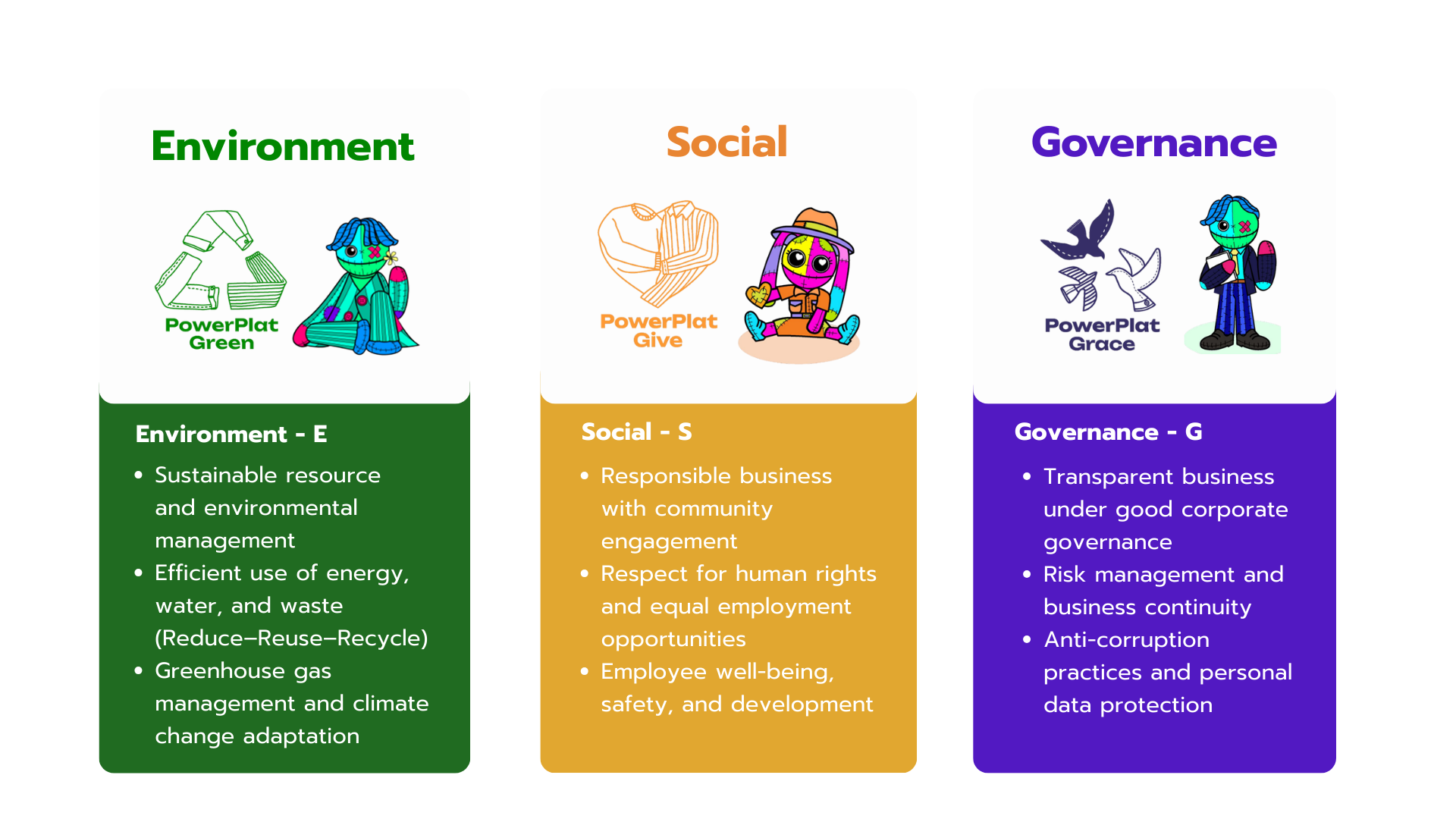
The Board of Directors recognizes the importance of environmental responsibility, social responsibility, and good corporate governance as key factors in enhancing the Company’s performance and enabling sustainable growth, which are fundamental to the Company’s long-term success. Accordingly, the Board of Directors has established written policies on good corporate governance and the Company’s Code of Conduct, with an emphasis on conducting business responsibly toward the environment and society throughout all processes and stages of operations, in order to prevent and mitigate potential environmental and social impacts.
In this regard, the Company has identified and categorized its stakeholders to comprehensively cover all dimensions, both internal and external, taking into consideration their involvement and potential impacts on the Company’s operations. This approach enables the Company to appropriately engage with and manage all stakeholder groups in accordance with its sustainable management framework, under the principles of good corporate governance that emphasize transparency, fairness, and accountability.
The Company places importance on all stakeholder groups based on the three dimensions of sustainability, namely environmental, social, and economic aspects. The Company has also assigned responsibilities to the Board of Directors, management, and employees to support, promote, and perform their duties in alignment with the Company’s policies on good corporate governance, the Code of Conduct, and sustainability management policies and objectives. These practices are fostered as part of the corporate culture, both directly and indirectly, to ensure effective achievement of organizational goals and integrated implementation across the Company.
Plans and Strategies
The Board of Directors establishes sustainability management policies and objectives through the Company’s vision and mission, and assigns management to develop business strategies that are aligned with the organization’s sustainable development strategy. Such strategies comprehensively cover all dimensions of sustainability, including environmental, social, and governance (ESG) aspects, in order to achieve the objectives set forth under the sustainability policy.
In formulating its strategies, the Company takes into consideration analyses of external factors and the sustainability context, such as trends in the wholesale and retail businesses, as well as related industries affected by changes in consumer behavior and competitive market conditions. These analyses are conducted in conjunction with assessments of internal factors, including operating performance, strengths, weaknesses, and enterprise-level risk indicators.
Furthermore, the Board of Directors has established a process for continuous monitoring of the implementation of the defined strategies and action plans, ensuring that they remain appropriate and responsive to the constantly changing business environment. This approach aims to enhance the Company’s competitiveness and create long-term value for the Company on a sustainable basis.
Policy Document Link
https://investor.theplatinumgroup.co.th/en/corporate-governance/corporate-sustainability-development-policy
Sustainability Goals & UN SDGs
Has Sustainability Goals
Yes
Goals Description
The Company has established its sustainability management objectives by taking into consideration the organizational context and its business operations. In addition, the Company has adopted relevant Sustainable Development Goals (SDGs) of the United Nations that are aligned with its business operations as guiding principles in setting such objectives, in accordance with good practices and to support sustainable business development. In doing so, the Company also takes into account environmental, social, and community considerations, as well as stakeholders throughout the business value chain. Accordingly, the Company has categorized its sustainability objectives into short-term and long-term goals, as follows:
Environmental Goals
Goal 1: Promote energy conservation and increase energy efficiency
Short-term goal (by 2026): Reduce electricity consumption by 3% (compared to 2024, the base year).
Long-term goal (by 2030): Reduce electricity consumption by 5% (compared to 2024, the base year).
Goal 2: Reduction of Water Loss and Improvement of Water Use Efficiency
Short-term Target (by 2026): Reduce water consumption by 3% (compared to 2024, the base year).
Long-term Target (by 2030): Reduce water consumption by 5% (compared to 2024, the base year).
Goal 3: Monitor the quality of wastewater from the production process to comply with laws and established standards, and select water-saving equipment.
Short-term goal (by 2026): Receive inspection and certification of wastewater quality from government agencies, reducing water loss by selecting water-saving sanitary ware.
Long-term goal (by 2030): Receive inspection and certification of wastewater quality from government agencies, and procure technology to improve water quality for reuse in certain activities.
Goal 4: Reduce greenhouse gas emissions.
Short-term goal (by 2026): Reduce Scope 1 and Scope 2 greenhouse gas emissions by 1% (compared to 2024, the base year).
Long-term goal (by 2030): Reduce Scope 1 and Scope 2 greenhouse gas emissions by 5% (compared to 2024, the base year).
Social Goals
Goal 1: Promote employee engagement rate.
Short-term goal (by 2026): Promote employee engagement rate to more than 85%.
Long-term goal (by 2030): Promote employee engagement rate to more than 95%.
Goal 2: Reduce employee turnover rate.
Short-term goal (by 2026): Reduce employee turnover rate to less than 24%
Long-term goal (by 2030): Reduce employee turnover rate to less than 15%.
Goal 3: Work-related injury leading to lost time rate.
Short-term goal (by 2026): Maintain a zero work-related injury leading to lost time rate.
Long-term goal (by 2030): Maintain a zero work-related injury leading to lost time rate.
Goal 4: Work-related fatality rate.
Short-term goal (by 2026): Maintain a zero work-related fatality rate.
Long-term goal (by 2030): Maintain a zero work-related fatality rate.
Goal 5: Human rights complaints.
Short-term goal (by 2026): No complaints regarding human rights.
Long-term goal (by 2030): No complaints regarding human rights.
Good Corporate Governance Goals
Goal 1: Continuously develop business for sustainability.
Short-term goal (by 2026): Accelerate the company's average annual revenue growth rate to 10%.
Long-term goal (by 2030): Maintain the company's average annual revenue growth rate at 8%.
Goal 2: Adhere to principles of good corporate governance and ethics.
Short-term goal (by 2026): No complaints regarding business ethics violations.
Long-term goal (by 2030): No complaints regarding business ethics violations.
Goal 3: Organization free from fraud and corruption.
Short-term goal (by 2026): There have been no complaints regarding fraud or corruption, and the Company has renewed its CAC membership in every renewal cycle.
Long-term goal (by 2030): There have been no complaints regarding fraud or corruption, and the Company has renewed its CAC membership in every renewal cycle.
Goal 4: Company directors, executives, and employees attend anti-corruption training.
Short-term goal (by 2026): 100% of trainees achieved an average test score of 83%.
Long-term goal (by 2030): 100% of trainees achieved an average test score of 90%.
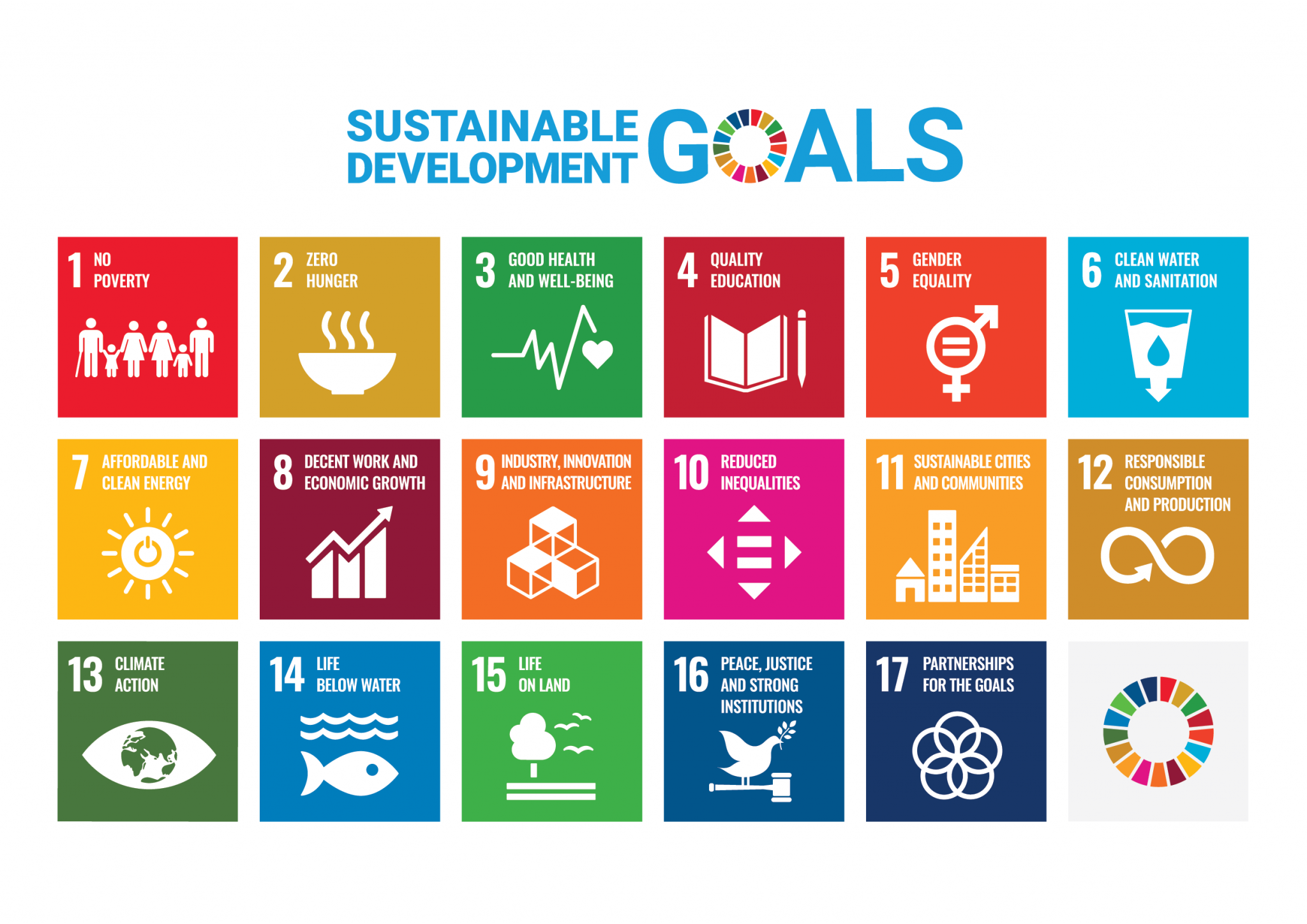
UN Sustainable Development Goals
| SDG Goal |
|---|
| Goal 1 No Poverty |
| Goal 2 Zero Hunger |
| Goal 3 Good Health and Well-being |
| Goal 4 Quality Education |
| Goal 5 Gender Equality |
| Goal 6 Clean Water and Sanitation |
| Goal 7 Affordable and Clean Energy |
| Goal 8 Decent Work and Economic Growth |
| Goal 9 Industry, Innovation and Infrastructure |
| Goal 10 Reduce Inequalities |
| Goal 11 Sustainable Cities and Communities |
| Goal 12 Responsible Consumption and Production |
| Goal 13 Climate Action |
| Goal 14 Life below Water |
| Goal 15 Life on Land |
| Goal 16 Peace, Justice and Strong Institutions |
| Goal 16 Peace, Justice and Strong Institutions |
| Goal 17 Partnerships for the Goals |
| Goal 17 Partnerships for the Goals |
Policy Review
Policy Reviewed This Year
Yes
Policy Changed This Year
Yes
Review Details
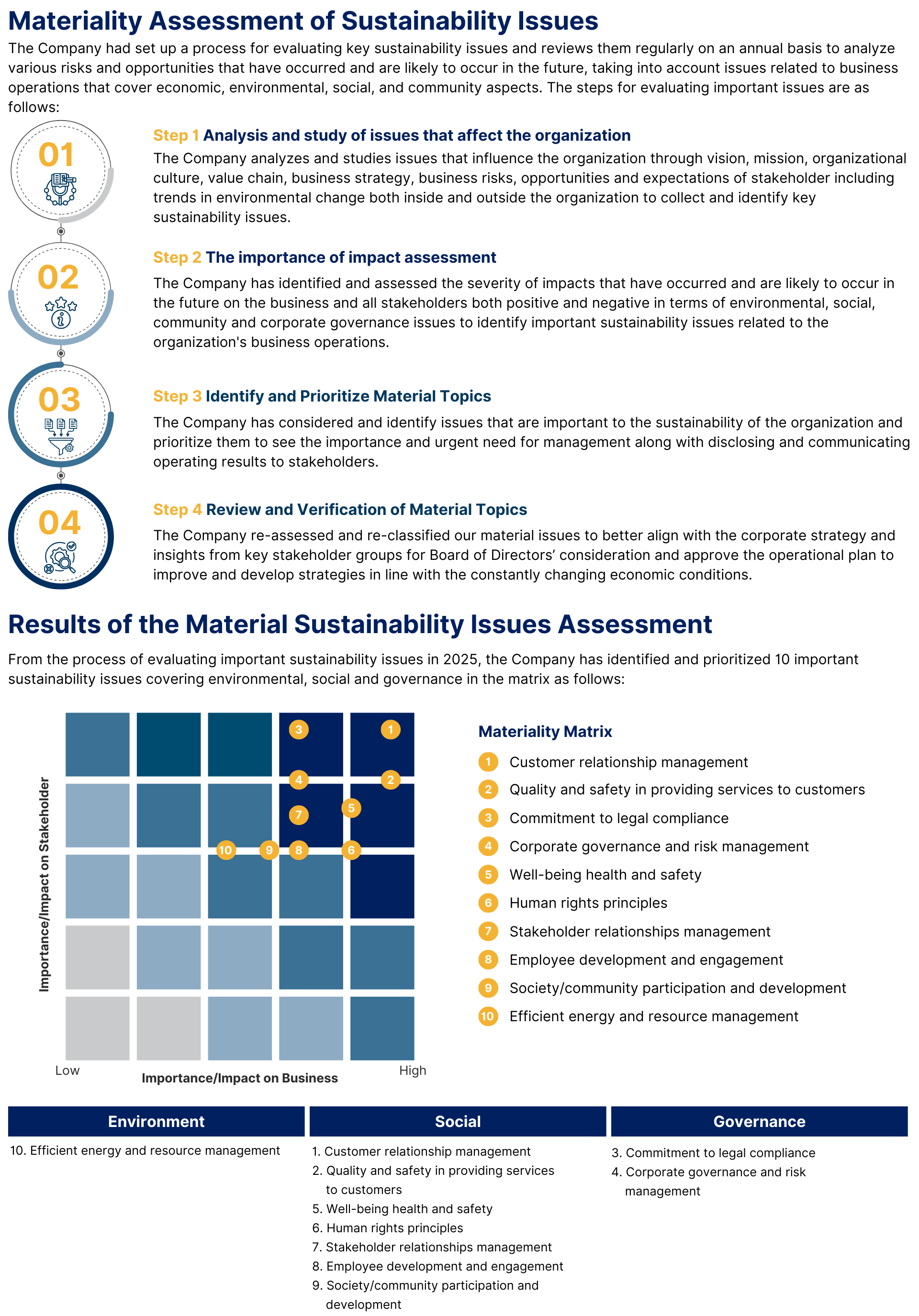
The Company conducts an annual assessment of material sustainability issues covering both internal and external business operations. The assessment considers potential positive and negative impacts on the Company, its stakeholders, and the entire value chain, and aligns with stakeholder expectations across environmental, social, and governance (ESG) dimensions. The process consists of the following:
1. Identification of Material Sustainability Issues
The Company has reviewed the nature of its business activities, including relationships throughout the value chain, as a basis for identifying material sustainability issues in line with international standards and current situations, to identify risks and opportunities arising from material sustainability issues, taking into account potential business impacts, both positive and negative, that may occur throughout the Company's operations and value chain.
2. Prioritization of Material Sustainability Issues
The Company has considered the materiality of sustainability issues by assessing the level of impact that has occurred or may occur to stakeholders, both positive and negative. The expectations of both internal and external stakeholder groups have been surveyed. The opinions and survey results from all stakeholder groups will be used to improve the efficiency of operations for each issue.
3. Monitoring of Material Sustainability Issues
The Company monitors and reports the management of material sustainability issues in line with its sustainable business policy, strategic plan, and enterprise risk management framework. Risk owners are assigned to implement appropriate risk mitigation measures.
In 2025, the Company established a Sustainable Development Working Group to support the setting of clear sustainability objectives and to continuously monitor the Company’s performance, with the aim of achieving tangible progress. Progress updates and performance results are regularly reported to the Board of Directors and the Executive Committee. In this regard, the Company has defined the roles, duties, and responsibilities as follows:
Roles, Duties, and Responsibilities of the Sustainable Development Working Group
Define appropriate guidelines and operational plans for sustainable development, in line with the organization's sustainable development policy of the Company.
Oversee, supervise, and review sustainable development operations to drive implementation and foster participation in project execution. under the sustainable development framework with relevant agencies.
Foster a culture of sustainable development and communicate to directors, executives, employees, and stakeholders to raise awareness and understanding of sustainable development.
Report on sustainable development performance and present it to the Board of Directors.
The role of the Sustainable Development Working Group is not limited to merely serving as a governance mechanism but also reflects the intention of the organization in conducting business transparently, responsibly, and considering stakeholders in all dimensions, as well as aiming to drive the organization towards long-term sustainable growth.
Impacts on Stakeholders — Overview
Introduction
The Company recognizes the importance of effective management based on ethical business conduct and responsibility for the impacts of its operations throughout the business value chain. It also plays a role in taking care of stakeholders and creating a better society in conjunction with the long-term growth of the business. In other words,
the Company prioritizes economic growth while considering social and environmental aspects throughout every step of its business operations to achieve the goal of sustainable business development.
Business Value Chain
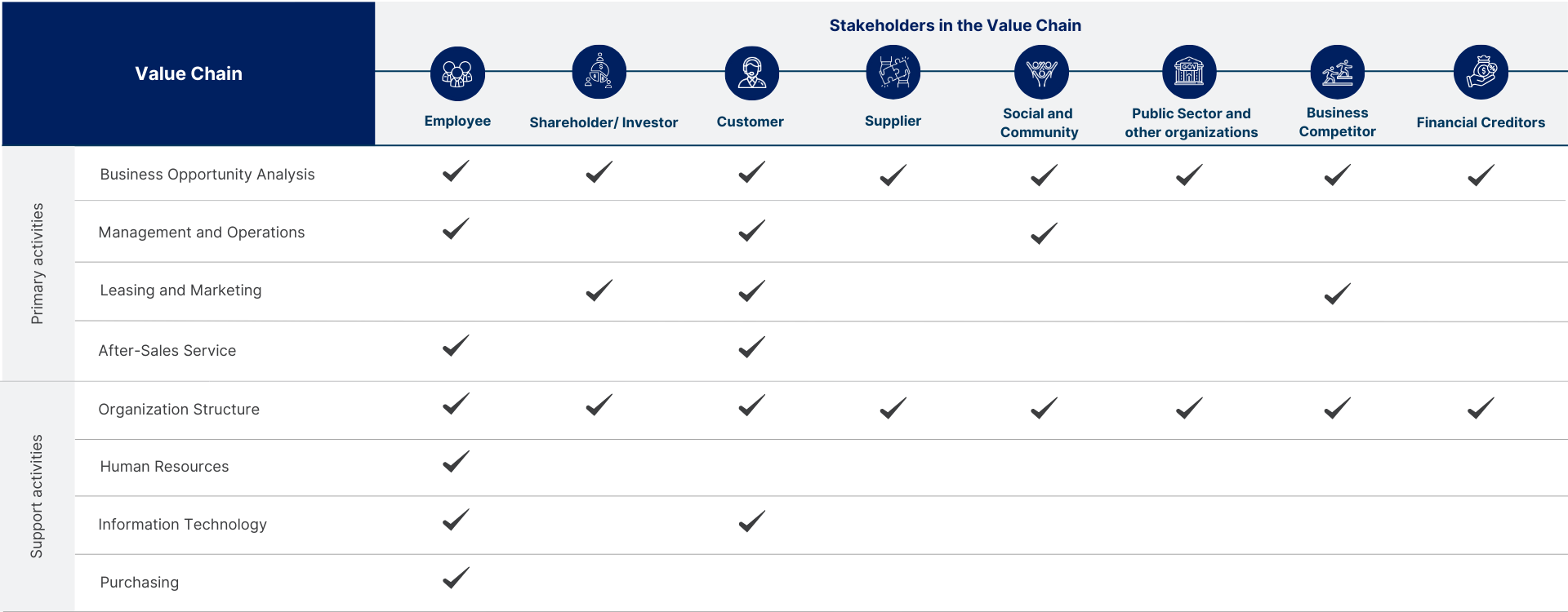
Value Chain Description
In the year 2025, the Company's core businesses can be divided into 4 groups: 1) Rental and Service Business,
2) Hotel Business, 3) Office Building Rental Business, and 4) Food and Beverage Business. From the analysis and
study of the Company's internal processes, the Value Chain can be identified as follows:
Primary Activity Analysis
1. Business Opportunity Analysis
The Company analyzes the feasibility of project development and management in business expansion by assessing the business environment, as well as considering the impacts and obstacles to all types of businesses, such as studying the needs of the area for business development and customer needs, business competitor analysis, environmental and social impacts, as well as analyzing investment risks and return on investment.
The Company seeks out project locations that meet customer needs and are easily accessible to basic amenities in accordance with relevant rules and regulations. At the same time, the Company also considers the impact on communities and the environment, as well as understand the communities in the area before proceeding.
The Company designs projects under environmental and social responsibility by obtaining permission from relevant agencies in accordance with the law. The design is appropriate to the needs of the service users and utilizes technologies, systems, equipment, and tools that meet standards are of high quality and environmentally friendly. It also promotes efficient energy management within the project, taking into account building safety standards.
The Company considers and selects contractors, consultants, and construction supervisors who are suitable, have good project cost management, and have meet the standards set by the Company. During construction, the Company monitors, controls, and inspects the process, including construction quality consistently. The Company also considers the safety and potential impacts on the environment and surrounding communities during construction.
2. Administration and Management
The Company manages areas and stores by defining and classifying surrounding stores to have a variety of both products and services. There are standards for inspect the area rigorously before delivery to ensure that customers receive a complete and safe space, as well as communicate to prepare for the area usage and understand the regulations regarding space rental and common area usage to ensure acceptance and orderly coexistence.
The Company prioritizes the service provision process and therefore provides project management and
continuously improves service efficiency, providing various utilities to facilitate service users, such as security
systems and maintaining the cleanliness of common areas, allocating traffic routes within the project, etc.
The Company has a property and maintenance management system in place to increase efficiency and extend
the lifespan of various systems and equipment by setting regulations and procedures for machinery and equipment maintenance.
3. Sales and Marketing
The Company has a variety of distribution channels to facilitate interested customers and increase the visibility of products and services. The Company establish a responsible department to monitor, communicate information about the project, and receive feedback from customers in order to develop or create services that meet customer needs comprehensively.
The Company organizes both online and offline marketing activities that help promote and stimulate sales. It is a communication strategy that helps support the Company in achieving its goals, such as the utilization of various platforms for online product sales, organizing events during various festivals (Special Events) to attract more customers, organizing promotional activities on online media platforms to create opportunities for new customer groups to see products and services.
The Company regularly studies, surveys rental rates and service fees in the same business group to determine rental rates and service fees appropriate and consistent with the economic situation. The Company also places importance on conducting sales and marketing operations with sincerity and responsibility towards customers both before and after providing services, including treating competitors fairly.
4. After-Sales Service
The Company places importance on building good relationships with customers to develop service quality
and enhance customer satisfaction. The Company establish customer relationship management through various processes, including having channels for receiving feedback and complaints from customers, survey customer satisfaction in order to analyze the information, develop, and improve operational efficiency and maintain
good relationships with customers continuously.
The Company is committed to the safety and privacy of its customers and therefore implements personal data
protection measures through a process manage personal data protection and provide complaint channels for
customers in the event of a data breach.
Support Activity Analysis
1. Organizational Infrastructure
Corporate Governance: The Company conducts its business in accordance with the principles of good corporate governance and business ethics.
Liquidity Management: The Company has an accounting and financial management process that supports the Company's business operations systematically, efficiently, and verifiably.
Risk Management: The Company reviews and assesses various risks that may affect the business on an annually.
2. Human Resources Management
The Company has a human resources management plan to support business growth through training to develop skills and potential. It also takes care of human rights, fair welfare, compensation, manages bio-safety and security to enhance work efficiency.
3. Information Technology
The Company utilizes digital systems and information technology to support operations within the organization to enhance the efficiency of various departments and to support efficient service delivery.
4. Purchasing
The Company has a transparent, honest, fair, and just purchasing policy. It also encourages business partners and allies to be responsible for environment, society, and good corporate governance.
Stakeholder Analysis
Introduction
In linking these processes, the Company has also analyzed and segmented key stakeholders, including defining
a roadmap for engagement, communication, feedback, and stakeholder engagement to respond to the opinions and expectations of each stakeholder group appropriately, completely, and promptly to drive concrete actions throughout the Company's value chain. The Company has implemented and has communication channels, as detailed below analysis of stakeholders in the business value chain:
Stakeholder Analysis
| Stakeholder Type | Stakeholders | Stakeholder Expectations | Response to Expectations | Communication Activities |
|---|---|---|---|---|
| External stakeholders | 2923 · Description: Customers | • Service quality and diversity
• Service convenience and security
• Offering a diverse product selection that meets customer needs
• Providing accurate and transparent information about products, services, promotions, terms and conditions
• Continuous improvement of products, services, and spaces
• Maintaining customer confidentiality | • Customer Satisfaction Survey
• Sales and Promotion Support (Co-Marketing)
• Complaint Handling and Response
• On-site Security System
• Quality Service Provision
• Establishment of Customer Confidentiality Policy | 2941 · Description: Online Communication · 2945 · Description: Complaint Reception · 2947 · Description: Satisfaction Survey · 2949 · Other name: Information Counter · Description: Others · 2949 · Other name: Customer service representative · Description: Others · 2949 · Other name: Company DPO contact information · Description: Others · 2949 · Other name: Website: theplatinumgroup.co.th/ · Description: Others |
| Internal stakeholders | 2921 · Description: Employees | • Work in a stable and progressive organization
• Receive fair and timely compensation
• Opportunities for professional development
• Good benefits and a positive work environment
• Work-life balance
• Occupational safety and health | • Establish employee career paths
• Ensure fair treatment and practices in terms of opportunities, compensation, and the appointment or transfer based on performance
• Treat employees with respect for human rights and labor ethics
• Develop training to enhance knowledge and skills based on positions both internal and external
• Provide a quality and safe environment | 2941 · Description: Online Communication · 2942 · Description: Internal Meeting · 2945 · Description: Complaint Reception · 2946 · Description: Employee Engagement Survey · 2949 · Other name: Promote activities that are beneficial to employees via email and employee line groups. · Description: Others · 2949 · Other name: Website: theplatinumgroup.co.th/ · Description: Others |
| External stakeholders | 2899 · Description: Suppliers | • Fair and transparent procurement
• Clarity of the scope of work, contract, terms and conditions
• Payment must be correct, complete with the agreed-upon terms.
• Sustainable value added and collaboration
• Corporate governance
• Sustainable supply chain management
• Business support capabilities
• Joint product and service development to enhance quality and standards | • Treating business partners fairly and equitably
• Having a clear and transparent procurement process
• Promoting participation in anti-corruption networks
• Promoting labor practices that respect human rights
• Complying with trade terms and conditions
• Engaging in free and fair competition | 2949 · Other name: Code of Conduct for Business and Procurement · Description: Others · 2949 · Other name: Reporting Anti-Corruption Policy via Email · Description: Others · 2949 · Other name: Website: theplatinumgroup.co.th/ · Description: Others |
| External stakeholders | 2904 · Description: Investors or investment institutions · 2913 · Description: Shareholders | • Good corporate governance
• Protection of shareholder rights and equality
• Good and consistent return on investment
• Strong performance and business sustainability
• Prudent and careful risk management | • Respect for the rights of shareholders in accordance with the law and the Articles of Association
• Conduct business based on the principles of good corporate governance
• Have controls over related party transactions
• Have measures to prevent conflicts of interest and prevent the use of inside information regarding confidential news for personal gain
• Publish reports and disclose information transparently
• Pay dividends to shareholders appropriately in accordance with the Company's dividend policy | 2944 · Description: Annual General Meeting (AGM) · 2949 · Other name: Annual Report Form 56-1 One Report · Description: Others · 2949 · Other name: Investor Relations Contact: ir@theplatinumgroup.co.th · Description: Others · 2949 · Other name: Investor Relations Contact: +662-121-9999 · Description: Others · 2949 · Other name: Website: theplatinumgroup.co.th/ · Description: Others |
| External stakeholders | 2902 · Description: Community · 2928 · Description: Society | • Conducting business operations with due regard to the health, safety, and quality of life of local communities, as well as effectively managing and mitigating any potential impacts arising from business activities
• Efficient and environmentally friendly management of waste, pollution, and resources generated from business operations
• Strict compliance with applicable laws, regulations, and standards relating to communities and the environment
• Actively listening to community feedback, suggestions, and complaints, and incorporating them into operational improvements. | • Organize activities to support surrounding communities
• Conserve important ecosystems in the vicinity of the Company's projects
• Operate responsibly with regards to the impacts from business processes
• Promote quality of living, community development and preserve local tradition and culture | 2940 · Description: Social Event · 2949 · Other name: Organize a team to explore and meet the surrounding community · Description: Others · 2949 · Other name: Building collaborative networks for community and social development · Description: Others · 2949 · Other name: Website contact channel: theplatinumgroup.co.th/ · Description: Others |
| External stakeholders | 2931 · Description: Government agencies and Regulators | • Strict compliance with applicable laws, regulations, and regulatory requirements.
• Business operations conducted in accordance with good corporate governance principles, transparency, and ethical standards.
• Accurate, complete, and timely disclosure of information in accordance with regulatory requirements.
• Effective risk management, internal control systems, and legal and regulatory compliance.
• Business operations aligned with government policies and sustainability objectives. | • Comply with all applicable laws and regulatory requirements, and regularly monitor changes in relevant laws and regulations
• Conduct business in accordance with the principles of good corporate governance and the Company’s Code of Conduct
• Disclose financial and material information accurately, completely, and transparently in compliance with applicable regulations
• Continuously develop and review internal control systems, risk management, and compliance processes
• Support business operations that take into account environmental, social, and sustainability considerations in line with government policies | 2941 · Description: Online Communication · 2943 · Description: External Meeting · 2945 · Description: Complaint Reception · 2949 · Other name: Website contact channel: theplatinumgroup.co.th/ · Description: Others |
| External stakeholders | 2898 · Description: Competitors | • Conduct business and compete with transparency and fairness
• Adhere to good and honest competition practices | • Adheres to a code of conduct in business competition, ensuring transparency and accountability
• Refrain from seeking confidential information or damaging the reputation of business competitors through dishonest or unethical means | 2949 · Other name: Website: theplatinumgroup.co.th/ · Description: Others |
| External stakeholders | 2894 · Description: Creditor · 2925 · Description: Financial institution | • Ability to repay debts on time
• Ability to generate profits from the company's operations | • Repay debts on time and comply with the specified terms
• Be responsible for maintaining financial ratios within the limits set for borrowing from banks or financial institutions | 2949 · Other name: Website: theplatinumgroup.co.th/ · Description: Others |
Environmental Policy & Guidelines
Has an Environmental Policy
Yes
Policy Description
The Platinum Group Public Company Limited and its subsidiaries recognize the importance of sustainable business operations under good corporate governance, prioritizing the management of environmental, social, and governance (ESG) impacts alongside fostering stable business growth. The Company has integrated sustainability goals, particularly the environmental dimension, into its corporate strategy and business plans to balance economic growth, efficient natural resource utilization, and long-term environmental impact reduction. Under the framework of energy policy and climate change adaptation, the Company prioritizes the management of electricity, a key resource for its shopping mall and hotel businesses. It continuously employs efficient building engineering systems and technologies to control, reduce, and enhance energy efficiency, coupled with reducing greenhouse gas emissions from operational processes and managing climate change-related risks.
The Company aims to drive environmental operations in a systematic and verifiable manner through the establishment of clear policies, practices, and governance structures, while promoting the participation of all stakeholders to support the achievement of ESG goals and the creation of sustainable value for the organization, society, and the environment in the long term. The Company has established a systematic environmental management framework, along with key policies and practices, as follows:
1) Management of Electricity and Resources
The Company promotes efficient and appropriate electricity usage through the management of electricity consumption in buildings, utility systems, and various support systems, as well as maximizing the benefits of water and natural resources. This is coupled with systematic management of operational waste and refuse, focusing on reducing waste at the source, following the Reduce, Reuse, Recycle concept, to minimize the amount of waste requiring disposal or landfilling.
2) Climate Change Adaptation
The Company manages and mitigates risks from climate change by prioritizing the reduction of greenhouse gas emissions from electricity consumption and business operations, as well as continuously improving energy efficiency, to support national and international climate change goals.
3) Personnel Engagement and Governance
The Company has established a working group for energy management and a working group for sustainability management to systematically drive and oversee energy and environmental operations. It also promotes awareness and provides training to employees at all levels, offering opportunities for employees to propose ideas and participate in energy-saving and environmental conservation activities, thereby fostering an organizational culture that continuously prioritizes sustainability.
4) Budgetary Support
The Company has allocated an annual budget to continuously support projects and activities related to enhancing electricity usage efficiency, conserving natural resources, and maintaining environmental quality.
5) Communication and Engagement with Customers and Operators
The Company emphasizes communication and collaboration with customers, partners, and operators to promote efficient resource utilization, energy conservation, and reduction of environmental impact. Energy policies and practices are continuously communicated, and stakeholders are encouraged to participate in implementing environmental measures throughout the business's value chain.
Furthermore, the Company, as a hotel business operator, and its selection of leading global hotel chain managers, namely Accor, IHG, and Marriott, which possess clear sustainability policies and practices, reflect the consistent direction of the global hotel industry in systematically prioritizing ESG operations. This ranges from efficient resource management and social and community care to good corporate governance. These concepts and activities can therefore serve as a reference framework for developing the Company's policies and elevating its sustainability operations to create long-term value for all stakeholder groups through the following projects:
1) Responsible Environmental Management (Accor – Green Key)
Accor prioritizes reducing environmental impact through the Green Key standard, an environmental certification system for the hotel business. It focuses on efficient resource utilization and tangible environmental conservation, such as reducing energy and water consumption, promoting renewable energy, systematic waste management, including reducing single-use plastics, environmentally conscious procurement, and raising environmental awareness among employees and guests. These approaches help elevate hotel operational standards to align with international climate change goals.
2) Creating Shared Value with Society and Communities (IHG – Giving for Good)
Under the Giving for Good concept, the IHG Group prioritizes reducing the environmental impact of hotel operations by focusing on efficient resource utilization, reducing energy consumption and greenhouse gas emissions, appropriate water management, and waste management according to the Reduce, Reuse, Recycle principle, including reducing single-use plastics. This is coupled with promoting engagement and raising environmental awareness among employees and guests to support long-term sustainable business operations.
3) Sustainable Business Operations in All Dimensions (Marriott – Serve 360)
Marriott developed a sustainability framework under its Serve 360 strategy, which covers four key dimensions: environmental stewardship and reducing operational impact, developing employee potential and well-being, strengthening communities and supply chains, and transparent and ethical corporate governance. It focuses on integrating sustainability into business strategy to balance economic growth, social responsibility, and long-term environmental preservation.
Policy Document Link
https://investor.theplatinumgroup.co.th/en/corporate-governance/corporate-sustainability-development-policy
Environmental Guidelines
| Guideline |
|---|
| Electricity Management |
| Water Management |
| Waste Management |
| Biodiversity Management |
| Greenhouse Gas and Climate Change Management |
| Air Quality Management |
Environmental Policy Review
Policy Reviewed This Year
Yes
Review Details
The Company is committed to developing efficient and appropriate energy utilization throughout its operations. It has systematically and consistently reviewed resource management in conjunction with minimizing environmental impact. This is conducted within the Environmental Dimension framework, adhering to good corporate governance principles, considering rapidly changing factors and aligning with the United Nations' Sustainable Development Goals (SDGs),include:
SDG 6 Clean Water and Sanitation
SDG 7 Affordable and Clean Energy
SDG 9 Industry, Innovation, and Infrastructure
SDG 11 Sustainable Cities and Communities
SDG 12 Responsible Consumption and Production
SDG 13 Climate Action
SDG 14 Life Below Water
SDG 15 Life on Land
Furthermore, the Company has adopted policies promoting energy efficiency across all types, applying them appropriately to the business context. Simultaneously, it collects and analyzes energy consumption data to support efficient energy management planning and decision-making. Alongside promoting employee engagement at all levels, a Sustainability Management Working Group has been appointed to collectively drive energy efficiency as an integral part of the organizational culture and support long-term sustainable business operations.
Policies & Guidelines Changed
| Change |
|---|
| Electricity Management |
| Water Management |
| Greenhouse Gas and Climate Change Management |
Energy — Plan & Guidelines
Has an Energy Management Plan
Yes
Plan Description
Energy Management Approach
In its operations, the Company prioritizes reducing energy consumption and increasing energy efficiency in building engineering systems through the selection of energy-saving technologies and equipment, coupled with continuous monitoring, inspection, and evaluation of energy usage across various systems, to support the reduction of Greenhouse Gas (GHG) emissions and mitigate the long-term impacts of climate change.
The Company operates under the ISO 14001 Environmental Management System (EMS) standard and the ISO 50001:2018 Energy Management System (EnMS) standard to systematically enhance energy management efficiency and build confidence among stakeholders.
Energy — Electricity Consumption
Electricity Consumption
| Metric | Current Year | Previous Year | Two Years Ago |
|---|---|---|---|
| Total electricity consumption within the organization (Kilowatt-Hours) | 32,153,407 | 33,445,079.12 | 29,423,421 |
| Electricity purchased for consumption from non-renewable energy sources (Kilowatt-Hours) | 32,153,407 | 33,445,079.12 | 29,423,421 |
| Electricity purchased or generated for consumption from renewable energy sources (Kilowatt-Hours) |
Energy — Fuel Consumption
Fuel Consumption
| Metric | Current Year | Previous Year | Two Years Ago |
|---|---|---|---|
| Crude oil (Barrels) | |||
| Coal (Metric tonnes) | |||
| Jet fuel (Litres) | |||
| Diesel (Litres) | 8,658 | 5,162 | 3,780 |
| Gasoline (Litres) | |||
| Fuel oil (Litres) | |||
| Natural gas (Standard cubic feet) | |||
| LPG (Kilograms) | 313,073 | 324,257 | 276,480 |
| Steam (Metric tonnes) |
Energy — Targets
Has Set Targets
Yes
Targets
| Target | Base Year | Base Year Value | Target Year | Target Change (%) | Unit |
|---|---|---|---|---|---|
| Reduction of electricity purchased for consumption | 2,024 | 33,445,079.12 | 2,030 | 5 | Kilowatt-hour |
Energy — Performance & Outcomes
Has Performance Results
Yes
Performance Description
Energy Consumption Management
The Company prioritizes energy management as part of its sustainable business operations, focusing on efficient energy use alongside natural resource conservation and environmental care. The Company mandates that all levels of management and every employee share roles and responsibilities in systematically supporting and driving energy management operations. Furthermore, the Company promotes the participation of partners, customers, tenant within the project and hotel guest to play a role in efficient energy use through communicating energy-saving guidelines, providing appropriate knowledge and advice, and supporting adherence to the company's energy management measures and guidelines, to collectively reduce energy consumption, minimize environmental impact, and create shared value throughout the value chain.
The aforementioned operations adhere to the principle of stakeholder participation from all sectors, under the supervision and coordination of the engineering department and relevant agencies, to ensure efficient energy management that aligns with the business context and supports the long-term sustainability of the organization, through various activities such as:
Enhancing Energy Efficiency through Preventive Maintenance
Preventive Maintenance of building engineering work systematically to maintain machine efficiency, reduce energy loss, and extend service life, equipment, in line with the SDG 12 Efficient Resource Utilization. The operational results in the past year 2025 helped reduce energy consumption by an average of 2-5% per month. Key activities include:
Maintaining indoor lighting systems and Facade Lighting to adjust Lux Level appropriately according to IESNA standards.
Cleaning and inspecting air conditioners AHU/FCU, including central systems, to reduce Energy consumption rate per unit of output (Specific Energy Consumption : SEC) of the system. heating, ventilation, and air conditioning systems which is Heating, Ventilation and Air Conditioning : HVAC
Maintaining chilled water pumps CHP/CDP and cleaning the Chiller Plant to increase the Coefficient of Performance (COP) of cooling equipment or air conditioning systems.
Adjusting automatic lighting systems: C-BUS to reduce electricity consumption during off-peak hours.
Optimized Energy Management based on actual usage conditions
The Company uses external temperature conditions data (Ambient Temperature) and actual usage (Occupancy Load) in controlling the Chiller Plant, resulting in a 3% reduction in electricity consumption in common areas compared to the previous year's baseline. Air conditioning systems were also improved, such as replacing AHU coils to reduce thermal loss, supporting SDG 7 Affordable and Clean Energy and SDG 13 Climate Change Adaptation by reducing emissions CO2e from electricity consumption.
Investment in and improvement of environmentally friendly infrastructure
To support long-term business operations, the Company has gradually upgraded and replaced equipment that has been in use for more than 20 years, which have lower efficiency and technology than current standards, focusing on reducing electricity consumption and environmental impact (Global Warming Potential: GWP) and reducing the total life cycle cost of equipment (Life Cycle Cost) such as:
Replacing energy-saving light bulbs of the type High Bay to increase lighting efficiency and reduce energy consumption.
Upgrading the control cabinet for the clean water pumping system to enhance operational efficiency and reduce electricity consumption.
Upgrading and replacing elevator and escalator parts to reduce downtime and enhance service efficiency.
In The Market Bangkok project, a Substation to increase energy efficiency and reduce electricity loss, thereby enabling appropriate management of energy costs.
Energy Management alongside Building System Safety and Stability
The Company recognizes that stable safety systems are an integral part of sustainable building management. Therefore, it continuously inspects and maintains related systems to help reduce environmental risks and damage from emergencies, supporting the goal of SDG 9 Industry, Innovation, and Infrastructure, and SDG 11 Sustainable Cities and Communities such as:
System inspection work Fire Alarm and heads Smoke Detector
Generator maintenance work to support power outages
Inspection and repair of main electrical cabinets, ventilation systems, and CCTV cameras
Collaboration with External Organizations on Energy Management
Novotel Platinum Pratunam Hotel has entered into a contract to participate in the CPMS (Chiller Plant Management System) project with Banpu NEXT to efficiently manage and control the hotel's main chiller plant system. The objective is to reduce the electricity consumption of the building's air conditioning system and reduce greenhouse gas (CO2) emissions.
Environmental Awareness and Engagement
The Company promotes the participation of building users, operators, and stakeholders through environmental activities, such as participating in activities Earth Hour, a campaign for energy conservation and reduction of greenhouse gas emissions, as well as to raise awareness of responsible energy use at the organizational and societal levels, supporting the goals SDG 13 Climate Change Adaptation by utilizing internal corporate communication channels via online platforms such as Line groups, emails, bulletin boards, and employee computer screens, to continuously provide knowledge on energy management, environmental changes, and natural resources to executives and employees.
Personnel Capacity Development in Energy and Building Systems Management
The Company recognizes that efficient energy and building system management requires personnel with modern knowledge, expertise, and skills. Therefore, it prioritizes developing employee potential through continuous training, including In-house training, On the Job Training, and participation in training and seminars with external agencies to elevate operational standards in environmental, safety, and sustainable energy use. In the past year, the Company provided an average of approximately 5 hours of training per year to employees involved in energy management, comprising the following:
In-house Training & On the Job Training
The Company organizes training for the engineering team and relevant departments to enhance knowledge in building systems, energy conservation, and efficient service delivery, such as the design and maintenance of ventilation system fans (Exhaust Fan and Make-up Air Fan) to increase ventilation efficiency and reduce energy consumption. Legal energy management (8 steps) and best practices for building electricians. Duties in various emergency situations. The Mentor Project, which is a guideline for developing the potential of the Company's personnel to perform tasks according to specified standards, strengthening knowledge transfer within the organization, and supporting efficient personnel rotation and replacement, helping to reduce workload gaps and increase operational continuity. The aforementioned training enables employees to apply their knowledge to actual operations, reduce energy loss, mitigate safety risks, and enhance service efficiency for building users.
Training Programs and External Seminar Participation
To ensure personnel acquire knowledge of modern technology and standards, the Company has sent employees to participate in training and seminars with specialized external agencies, such as attending the seminar Hitachi Energy Transformer Service Roadshow 2025 to enhance knowledge of current transformer technology. Training courses for building electricians, organized by the Department of Skill Development, to strengthen knowledge of safety standards and efficient use of electrical systems, among others. Participation in these activities enhances the engineering team's capability to maintain stable, safe, and environmentally friendly electrical and energy systems in buildings.
The aforementioned energy management operations have enabled the company to continuously reduce electricity consumption in common areas, lower long-term energy costs and maintenance expenses, reduce greenhouse gas emissions from energy use, and support the goals of ESG and the concrete sustainable development of the organization.
In the past year 2025, The Platinum Group Public Company Limited, the operator of The Platinum Fashion Mall, received the MEA ENERGY AWARDS 2025 level STANDARD from the Building Energy Efficiency Improvement Promotion Project, Year 8, organized by the Metropolitan Electricity Authority Authority (MEA) by passing the assessment according to the energy-saving measures criteria of MEA which consists of 2 main parts:
Electricity consumption criteria (MEA Index)
Criteria Indoor Air Quality (IAQ)
Receiving the MEA ENERGY AWARDS confirms the Company's emphasis on efficient energy management and the control of indoor air quality within the shopping center for the benefit of its patrons. It also reflects The Platinum Group's commitment to conducting business alongside serious social and environmental responsibility, under the project "Power Plat Green" reinforcing the Company's sustainability policy, which emphasizes environmental, social, and good corporate governance responsibilities. These are crucial factors that help elevate the Company's performance for sustainable growth and are key to achieving success.
Water — Plan & Guidelines
Has a Water Management Plan
Yes
Plan Description
Water resources are fundamental factors essential for sustainable business operations. The Company therefore establishes policies for efficient and responsible water management and utilization, covering operations across all business groups, namely shopping centers, hotel businesses, and office buildings. This focuses on the valuable use of water resources, reducing environmental impact, and supporting long-term natural resource conservation.
Water — Withdrawal, Discharge & Consumption
Water Withdrawal, Discharge & Consumption
| Metric | Current Year | Previous Year | Two Years Ago |
|---|---|---|---|
| Total water withdrawal (Cubic meters) | 424,835 | 460,782 | 400,226 |
| Total water withdrawal by third-party water (Cubic meters) | 424,835 | 460,782 | 400,226 |
| Total water withdrawal by surface water (Cubic meters) | |||
| Total water withdrawal by groundwater (Cubic meters) | |||
| Total water withdrawal by seawater (Cubic meters) | |||
| Total water withdrawal by produced water (Cubic meters) | |||
| Percentage of wastewater treated before discharge (%) | 0 | 0 | 0 |
| Total water discharge (Cubic meters) | 0 | 0 | 0 |
| Total water discharge to third-party water (Cubic meters) | 0 | 0 | 0 |
| Total water discharge to surface water (Cubic meters) | 0 | 0 | 0 |
| Total water discharge to groundwater (Cubic meters) | 0 | 0 | 0 |
| Total water discharge to seawater (Cubic meters) | 0 | 0 | 0 |
| Total water consumption (Cubic meters) | 424,835 | 460,782 | 400,226 |
| Recycled water (Cubic meters) |
Water — Targets
Has Set Targets
Yes
Targets
| Target | Base Year | Base Year Value | Target Year | Target Change (%) | Unit |
|---|---|---|---|---|---|
| Reduction of water consumption | 2,024 | 460,782 | 2,030 | 5 | Cubic meters |
Water — Performance & Outcomes
Has Performance Results
Yes
Performance Description
Water Management
The Company implements this policy under the sustainable development framework (ESG) in the environmental dimension and emphasizes the participation of management and employees at all levels, as well as compliance with relevant laws, regulations, and standards. This policy aligns with the United Nations Sustainable Development Goals: SDGs especially the SDG 6 Clean Water and Sanitation and SDG 12 Responsible Consumption and Production, through various activities such as:
Systematic monitoring and control of water usage
Installation and inspection of water meters in key areas of shopping centers and hotels to monitor water consumption by system and usage area, and to regularly analyze water usage trends for appropriate water control and reduction planning, as well as to detect system anomalies to minimize unnecessary water loss.
Preventive maintenance of water and sanitation systems
Preventive maintenance of plumbing systems, sanitary ware, and water pumping systems to ensure systems are in perfect condition, reduce leaks, and extend equipment lifespan, such as:
Inspection and maintenance of sanitary ware in common areas and tenant-occupied spaces
Inspection and improvement of control cabinets for water pumping systems to storage tanks
Regular maintenance of water pumps and plumbing systems
Use of water-saving equipment and enhancement of usage efficiency
Promotion of water-saving equipment, such as water-efficient sanitary ware and flow-controlled faucets and water pressure control systems to maximize water efficiency without affecting the quality of service provided to customers and building occupants.
Water management in air conditioning systems and engineering works
Water usage management in engineering systems, especially air conditioning systems and Chiller Plant through proper equipment maintenance and system operation control to reduce water consumption and enhance overall system efficiency.
Fostering awareness and participation in valuable water use
Promote awareness among employees regarding economical and efficient water use tenants, and operators within shopping centers and hotels through internal communication, training, and advice on appropriate water usage. Campaigns encourage hotel guests to conserve energy by displaying signs about methods to reduce energy and water consumption in guest rooms, to collectively reduce usage and preserve water resources sustainably.
Wastewater Treatment & Effluent Control
The Company systematically controls and treats wastewater to preserve environmental quality, reduce impacts on surrounding communities, and build confidence in responsible business operations. Wastewater from shopping centers and hotel businesses is treated in accordance with relevant environmental laws, regulations, and standards of Bangkok Metropolitan Administration and government agencies, under the operational framework of ESG in the environmental dimension and according to the SDG 6 Clean Water and Sanitation, SDG 11 Sustainable Cities and Communities, and SDG 12 Responsible Consumption and Production, through various measures as follows:
Compliance with relevant laws and standards
The Company manages and treats wastewater in accordance with relevant laws and regulations, such as:
Environmental Quality Promotion and Protection Act
Regulations and announcements of the Bangkok Metropolitan Administration regarding the control and treatment of wastewater from buildings and establishments
Effluent quality standards before discharge into public drainage systems or natural water sources
The Company controls effluent quality to meet specified standards, such as water pollution values ( BOD, COD), Suspended Solids, pH, and other parameters as prescribed by law, by In the year 2025, the Company measured and controlled effluent quality to comply with standards set by laws and relevant agencies. As a result, the Company found no instances of environmental law violations and incurred no environmental fines or penalties.
Wastewater treatment systems
The Company installs and maintains wastewater treatment systems from activities within shopping centers and hotels appropriately, covering major wastewater sources such as restrooms, food courts, restaurants, and various service areas, to ensure efficient treatment processes and continuous control of effluent quality through various activities as follows:
Maintenance and inspection of wastewater treatment systems
The Company conducts preventive maintenance wastewater treatment systems and related equipment regularly, including
Performance inspection of wastewater treatment systems
Measurement and recording of effluent quality according to specified intervals
System rectification and improvement upon detecting anomalies to prevent the discharge of non-compliant effluent
Effluent quality control and monitoring
The Company systematically collects data and monitors effluent quality measurements to analyze trends and improve treatment processes for greater efficiency. The Company also cooperates with relevant agencies in inspecting and reporting environmental data as required by law.
Awareness building and participation
The Company promotes proper wastewater management awareness among employees, tenants, and operators within shopping centers and hotels, such as providing knowledge on appropriate water usage and avoiding the disposal of chemicals or waste that could affect the wastewater treatment system, to collectively preserve environmental quality and surrounding communities sustainably.
Waste — Plan & Guidelines
Has a Waste Management Plan
Yes
Plan Description
The Company has integrated waste and by-product management throughout its entire operational value chain, with a focus on minimizing waste generation at the source and ensuring proper disposal in full compliance with applicable laws and regulations, thereby limiting environmental impacts. In doing so, the Company gives due consideration to all stakeholder groups. The Company adheres to the 3R waste management principles Reduce, Reuse, and Recycle - by reducing resource consumption at the source, reusing materials where possible, and recovering waste for beneficial reuse. This approach enhances resource efficiency and reduces the volume of waste requiring final disposal.
The Company sorts waste at the source in office areas, shops, food courts, and hotels by categorizing waste into 4 types, namely wet waste, recyclable waste, hazardous waste, and general waste, to ensure that each type of waste is managed and disposed of using appropriate scientific methods, as well as complying with relevant agency regulations. The Company does not dispose of waste or refuse by incineration to reduce the risk of air pollution and impacts on surrounding communities, which aligns with the SDG 12 Creating sustainable production and consumption patterns.
Waste — Generation, Disposal & Recycling
Waste Generation, Disposal & Recycling
| Metric | Current Year | Previous Year | Two Years Ago |
|---|---|---|---|
| Total waste generated (Kilograms) | 2,718,027 | 1,506,844.16 | 1,491,699 |
| Non-hazardous waste (Kilograms) | 2,649,818 | 1,506,750 | 1,491,699 |
| Non-hazardous waste - Landfilling (Kilograms) | |||
| Non-hazardous waste - Incineration (with energy recovery) (Kilograms) | |||
| Non-hazardous waste - Incineration (without energy recovery) (Kilograms) | |||
| Non-hazardous waste - Other disposal operations (Kilograms) | |||
| Hazardous waste (Kilograms) | 68,209 | 94.16 | |
| Hazardous waste - Landfilling (Kilograms) | |||
| Hazardous waste - Incineration (with energy recovery) (Kilograms) | |||
| Hazardous waste - Incineration (without energy recovery) (Kilograms) | |||
| Hazardous waste - Other disposal operations (Kilograms) | |||
| Total reused/recycled waste (Kilograms) | 52,699 | 159,627 | 145,884 |
| Reused/Recycled non-hazardous waste (Kilograms) | 52,699 | 159,627 | 145,884 |
| Reused non-hazardous waste (Kilograms) | |||
| Recycled non-hazardous waste (Kilograms) | |||
| Reused/Recycled hazardous waste (Kilograms) | |||
| Reused hazardous waste (Kilograms) | |||
| Recycled hazardous waste (Kilograms) |
Waste — Targets
Has Set Targets
Yes
Targets
| Waste Type | Disposal Approach | Target | Base Year | Base Year Value | Target Year | Target Change (%) | Unit |
|---|---|---|---|---|---|---|---|
| Non-hazardous waste | 2758 · Description: Reuse · 2759 · Description: Recycle · 2760 · Description: Landfilling | Reduce waste volume | 2,024 | 1,506,750 | 2,030 | 10 | Kilograms |
Waste — Performance & Outcomes
Has Performance Results
Yes
Performance Description
Management of Each Waste Type
Wet Waste or Organic Waste This includes food scraps, vegetable scraps, fruit scraps, meat scraps, and leaf litter. The Company sorts and delivers these to responsible agencies for appropriate utilization, such as processing or disposal according to sanitary principles.
Recyclable Waste This includes plastic bottles, glass bottles, aluminum cans, and paper. The Company collects and sells these for recycling, while also campaigning for employees and stakeholders to reduce the use of consumables and promote material reuse.
Hazardous Waste This includes waste containing contaminants or hazardous materials, such as chemicals, light bulbs, and aerosol cans. The Company delivers these to authorized agencies for legally compliant disposal, utilizing secure landfills to prevent the contamination of the environment by toxic substances.
General Waste This includes waste that cannot be easily recycled or decomposed, such as snack wrappers, foam boxes, tissue paper, and straws. The Company sends these to relevant agencies for disposal by sanitary landfill methods.
Source Separation Program
The Company encourages employees and retail tenants to properly and consistently separate waste at the source. Clearly designated waste disposal points are provided, with appropriate labeling according to each waste category. This initiative is supported by ongoing education and communication to enhance understanding and promote effective waste segregation practices. The program aims to reduce the volume of waste requiring disposal, increase resource recovery rates, and support efficient and sustainable resource management.
Organic Waste and Food Waste Management
The Company places strong emphasis on the systematic management of organic waste and food waste by promoting waste separation at food outlets for appropriate processing and utilization. This approach helps reduce the amount of waste sent for disposal. In addition, training sessions and knowledge-sharing activities are provided to employees and retail tenants on effective food management practices, which contribute to minimizing resource loss, improving raw material efficiency, and supporting effective cost management.
Novotel Platinum Pratunam has partnered with the Wake Up Waste project under SCG Group to sell recyclable waste for conversion into recycled products. The hotel has also collaborated with the "Tod Mai Ting" (Fry without waste) project under Bangchak Corporation by selling used cooking oil for conversion into Sustainable Aviation Fuel (SAF), thereby reducing landfill waste and greenhouse gas emissions. Furthermore, Novotel Platinum has implemented a food waste reduction policy through food waste data recording, customer communication, and continuous training for food and beverage staff. The hotel also participates in the "Food for Thought" program by donating surplus food from its breakfast buffet to a children's welfare organization, creating shared value for society and the surrounding community.
Recycle and Reuse Program
The Company operates a recycling collection program for materials such as paper, plastic, metal, and glass, alongside initiatives promoting material reuse to increase recycling rates and reduce waste sent for disposal. Moxy Bangkok has organized activities to collect plastic bottle caps and various types of plastic lids from the staff cafeteria, which are then delivered to Four Points by Sheraton Sukhumvit 22 for conversion into award medals for the "Road to Give 2025" event. In addition, Novotel Platinum has eliminated the use of single-use plastics in guest rooms, restaurants, and meeting rooms, and has replaced guest amenities with environmentally friendly products made from recycled materials, such as toothbrushes, toothpaste, shower caps, combs, sewing kits, and razors. These initiatives reflect strong employee engagement in environmental stewardship and demonstrate how small actions can generate tangible positive environmental impacts.
Awareness Building and Stakeholder Engagement
The Company organizes various activities and initiatives to promote knowledge, understanding, and participation among employees, retail tenants, hotel guests, and relevant stakeholders. These include training programs on waste categories such as general waste, recyclable waste, organic waste, and hazardous waste along with proper waste segregation guidelines to ensure effective implementation in operational areas and retail spaces.
Food Waste Reduction policy signage has been displayed in dining areas to raise awareness among guests and employees. In addition to workplace food waste reduction practices, Novotel also participates in the "Food for Thought" program by donating selected bakery items from its breakfast buffet to a children's shelter operated by the Good Shepherd Sisters Bangkok, further contributing to social and community well-being.
Development of Communication Materials and Internal Signage
The Company develops and disseminates communication materials, including infographics, waste segregation signage, and digital media in common areas, to enhance awareness, understanding, and continuous engagement among employees and retail tenants. These efforts aim to encourage consistent and practical implementation of waste management practices throughout the organization.
Performance Monitoring and Evaluation
The Company regularly collects data on the volume of each waste type, analyzes the results, and campaigns for waste separation to raise awareness among employees and operators.
From various activities and projects implemented by the Company to reduce waste and refuse, in 2025, the Company had a volume of recyclable waste that could be reutilized approximately 52,699 kilograms per year, accounting for 1.9 percent, an increase of 1.5 percent from the previous year. The Company has regularly held monthly auctions for recyclable waste to interested parties. This method allows the waste to be further valorized, enabling the Company generated an annual revenue of approximately 50,000 Baht in 2025 from these operations.
GHG — Plan & Guidelines
Has a GHG Management Plan
Yes
Plan Description
With the increasing severity of global warming and climate change, resulting from greenhouse gas emissions from human activities, the Company set environmental sustainability goals. It has focused on implementing measures to reduce and enhance the efficiency of energy consumption, while also fostering awareness and participation among employees at all levels to collectively reduce energy use. This includes establishing guidelines for selecting appropriate technologies or management strategies to reduce energy costs and greenhouse gas emissions simultaneously. Although the Company's core business operations do not significantly impact or generate greenhouse gases.
Nevertheless, in the short-term goals, the Company continues to prioritize the study of Carbon Footprint for Organization (CFO) assessment. This is aimed at developing and improving the Company's operational processes to effectively reduce greenhouse gas emissions. It involves collecting important details of the greenhouse gas inventory data collection process across all organizational levels, storing statistical data for analysis, and planning to develop a greenhouse gas inventory management plan, including setting short-term and long-term targets in various areas. This will lead to appropriate verification of the greenhouse gas inventory by external organizations. Under this study, the Company has classified its direct and indirect greenhouse gas emission activities as follows:
Scope of Greenhouse Gas Emissions
Scope 1 : Direct GHG Emissions and Removals
• Company vehicle usage
• Refrigerant leakage
• Use of fire extinguishing agents for fire drills
• Methane emissions from wastewater treatment systems
• Use of cooking gas (LPG)
Scope 2 : Energy Indirect GHG Emissions
• Electricity consumption from the Metropolitan Electricity Authority
Scope 3 : Other Indirect GHG Emissions
• Tap water consumption
• Office paper consumption
• Solid waste landfilling
GHG — Emissions
GHG Emissions
| Metric | Current Year | Previous Year | Two Years Ago |
|---|---|---|---|
| Total GHG emissions (Metric tonnes of carbon dioxide equivalent) | 19,079.95 | 19,861.98 | 17,405.33 |
| Total greenhouse gas emissions 1 (Metric tonnes of carbon dioxide equivalent) | 868.26 | 918.69 | 739.9 |
| Total greenhouse gas emissions 2 (Metric tonnes of carbon dioxide equivalent) | 18,211.69 | 18,943.29 | 16,665.43 |
| Total greenhouse gas emissions 3 (Metric tonnes of carbon dioxide equivalent) |
GHG — Emissions Verification
Emissions Verified by a Third Party
No
GHG — Principles & Standards
Principles & Standards Applied
| Standard |
|---|
| 2671 |
| 2672 |
GHG — Targets
Has Set GHG Targets
Yes
GHG Targets — Other Targets
Introduction
In 2025, the Company assess the amount of greenhouse gas emissions from its operations in Scope 1 and Scope 2 through a Carbon Footprint for Organization (CFO) assessment, calculated in terms of tons of carbon dioxide equivalent (tCO2 e), and set short-term and long-term targets for reducing greenhouse gas emissions to align with its sustainable business strategy. The Company has set the following targets:
Other GHG Targets
| Emission Scope | Base Year | Base Year Emissions | Near-term Target Year | Near-term Target Change (%) | Long-term Target Year | Long-term Target Change (%) | Target Year | Target Change (%) | Unit | Per Unit (Intensity) | Per Unit — Please Specify |
|---|---|---|---|---|---|---|---|---|---|---|---|
| 2715 | 2,024 | 19,861.98 | 2,026 | 3 | 2,030 | 5 | 2,026 | 3 | Metric tonnes of carbon dioxide equivalent | Business unit | Business unit |
GHG — Performance & Outcomes
Has Performance Results
Yes
Performance Description
Greenhouse Gas Management
Based on the assessment of greenhouse gas emissions from the Company's operations in 2025, the Company achieved a reduction in Scope 1 and Scope 2 emission intensity by 5 percent and 4 percent, respectively, compared with 2024. This reflects the effectiveness of the systematic energy management measures implemented across all business units. The reductions were attributable to the continuous enhancement of electricity management practices, including the optimization of building engineering systems, the monitoring and analysis of energy consumption through measurement and tracking systems, the upgrading of equipment to higher-efficiency technologies, and the promotion of energy awareness among employees at all levels. These measures have not only reduced overall energy consumption but have also significantly contributed to lowering both direct and indirect greenhouse gas emissions from the Company’s operations.
Other activities and projects that support the reduction of greenhouse gas emissions
Beyond energy management activities, the Company emphasizes the design and development of new projects that are environmentally friendly and beneficial to residents, to sustainably support the reduction of greenhouse gas emissions. A significant example is the PIER 111 office building project for rent, which is designed to align with the lifestyle of the new generation workforce and adapt to environmental changes throughout the building's lifespan. This considers efficient resource utilization, focusing on saving energy, water, and natural resources, reducing pollution and waste, selecting non-toxic and environmentally friendly materials and products, and enhancing the quality of life for residents. The building is designed to support future renewable energy use and maintain good Indoor Environmental Quality. Furthermore, the Company also prioritizes the quality of life and safety of residents and surrounding communities, for instance, by designing lighting systems that combine natural light with efficient and standardized artificial lighting for work, installing wastewater treatment systems, and standardized waste separation systems.
Regarding measures to prevent and mitigate environmental impacts from project development, the Company designates environmental care as one of the organization's key sustainability issues. The goal is to develop projects in conjunction with sustainable environmental conservation, in support of the government's policy objective of achieving carbon neutrality.
The Company strictly adheres to environmental laws and regulations. Every project is required to complete a comprehensive Environmental Impact Assessment (EIA) report before commencing construction, to evaluate both positive and negative impacts on the environment and surrounding communities. This covers important environmental issues such as biodiversity, air and noise pollution, water & soil quality, and occupational health. The Company has established a dedicated environmental unit throughout the project development process to supervise, monitor, and inspect operations to ensure strict compliance with specified measures including the Platinum Square project which is currently under construction, has undergone environmental impact assessment and received approval for construction.
Regarding the hotel business, Novotel Bangkok Platinum Pratunam continuously prioritizes environmental responsibility and sustainable operations. The hotel has received the "Green Key" certification from the Foundation for Environmental Education (FEE), an internationally recognized environmental organization, for the second consecutive year. The hotel has established an environmental management and sustainable operations policy, focusing on three main areas: sustainable stays, sustainable food cycles, and local community support. This policy is communicated thoroughly to employees, guests, and business partners. Furthermore, the hotel uses environmentally friendly cleaning products from Ecolab, which are Green Seal certified from the United States, to avoid the use of hazardous chemicals and help reduce the consumption of natural resources.
Furthermore, the hotel has incorporated knowledge content regarding Green Key standards for all new employees (100 percent) to enhance their understanding of environmental management, sustainable operations, and participation in environmental and community activities, thereby concretely fostering a sense of environmental responsibility.
Environmental Legal Incidents
Legal Violation Incidents
| Metric | Current Year | Previous Year | Two Years Ago |
|---|---|---|---|
| Number of cases or incidents of legal violations or negative environmental impact (cases) | 0 | 0 | 0 |
Other Environmental Management
Plan Description
Air Pollution Management
Air Quality Control
The Company prioritizes air pollution management to create a safe and healthy environment for employees, customers, and visitors. Air quality within the shopping center is continuously monitored and maintained to meet standard criteria. Given the ongoing issue of PM2.5 fine dust, which has continuously affected public health in Thailand over recent years, the Company recognizes the importance of preventing and mitigating these impacts. Therefore, air quality management measures have been implemented, including spraying water to clean areas within the project to reduce dust dispersion from construction, traffic, and vehicle use. Traffic routes within the project are managed and controlled appropriately, with clear signage installed to improve traffic efficiency, reduce vehicle congestion, and minimize exhaust pollution. Standard and certified air filters are installed in the air conditioning system to help trap dust particles and unpleasant odors. The building is designated as a smoke-free zone, prohibiting smoking inside the building and its surrounding areas, temperature, humidity, and oxygen (O2) within the building to a level appropriate for health and use, installation of an Air Flow Sensor system and a Carbon Dioxide (CO2 Sensor) to control the amount of fresh air appropriate for the number of building occupants, and requests cooperation from parking users to turn off their engines while parked to reduce the accumulation of exhaust fumes within the parking facility.
Biodiversity Management
The Company considers the potential impacts on ecosystems and biodiversity that may arise from its business operations. Therefore, biodiversity issues are considered from the pre-project development stage, avoiding project development in conservation areas or areas with high biodiversity. The Company also aims to preserve and restore ecosystems around the project to minimize the loss of biodiversity value.
In 2025, the Company implemented ecosystem conservation and restoration activities supporting the SDG 13, SDG 14, and SDG 15. These activities contribute to greenhouse gas absorption, coastal ecosystem restoration, and biodiversity conservation through various projects as follows:
Bophut Beach Cleaning Project
Due to the problem of marine debris, which largely originates from human activities on the coast and severely impacts marine ecosystems, the economy, and tourism, Holiday Inn Resort Samui organized the Bophut Beach Cleaning Project to collect waste in the Bophut beach area and community. It was found that most of the waste consisted of difficult-to-degrade plastic waste such as plastic bags, bottles, and various packaging materials. This project helped raise awareness among employees, local communities, and tourists regarding sustainable participation in marine and coastal resource conservation.
Save Our Ocean Project by TerraCycle Thai Foundation
Novotel Platinum Pratunam Hotel participated in the Save Our Ocean project by TerraCycle Thai Foundation, a non-profit organization working with communities, government, and the private sector to address plastic waste pollution. This is achieved by intercepting waste from water sources such as rivers and canals before it flows into the sea, and by promoting sustainable waste management systems at the local level.
Mangrove Forest Conservation Center Project
Moxy Bangkok Ratchaprasong Hotel participated in the Mangrove Forest Conservation Center project, which focuses on planting and restoring mangrove forests in degraded areas, caring for and monitoring the growth of mangrove species, conserving aquatic and coastal animal habitats, and promoting environmental education for communities, youth, and stakeholders to foster long-term participation in natural resource conservation.
Human Rights Due Diligence
Conducts Human Rights Due Diligence
Yes
Due Diligence Description
The Platinum Group Public Company Limited and its subsidiaries (the "Company") have established a comprehensive human rights due diligence process, referencing the risk assessment process based on the United Nations Guiding Principles on Business and Human Rights (United Nations Guiding Principles on Business and Human Rights: UNGPs) concerning the Protection of rights, Respect for Rights and Remediation to serve as a guideline and framework for operations. The Company recognizes the importance and potential impacts of human rights issues in its business operations throughout the value chain. It has also developed guidelines for managing, preventing, and remediating human rights impacts, including a comprehensive human rights due diligence process, which comprises: 5 key steps as follows:
1) Company Policy and Principles on Respect for Human Rights (Policy Commitment)
The Company has established a human rights policy based on international human rights principles and standards, including the Universal Declaration of Human Rights (UDHR), Declaration on Fundamental Principles and Rights in the workplace of the International Labour Organization, The International Labor Organization (ILO) and Declaration on Fundamental Principles and Rights at Work and the United Nations Guiding Principles on Business and Human Rights, United Nations Guiding Principles on Business and Human Rights (UNGP) to serve as a guideline for the organization's human rights practices, covering the operations of the Company and its affiliates, as well as relevant stakeholders in the business value chain, to prevent all forms of unlawful acts and human rights violations.
2) Human Rights Risk Assessment
Defining Scope and Identifying Human Rights Risk Issues - The Company has defined the scope for identifying and assessing actual and potential human rights risks arising from all operations and activities of the Company and its subsidiaries. This involves considering potential impacts on both internal and external stakeholders who may be directly or indirectly affected by the Company's business activities throughout the value chain, focusing on human rights issues related to the Company's activities and its supply chain.
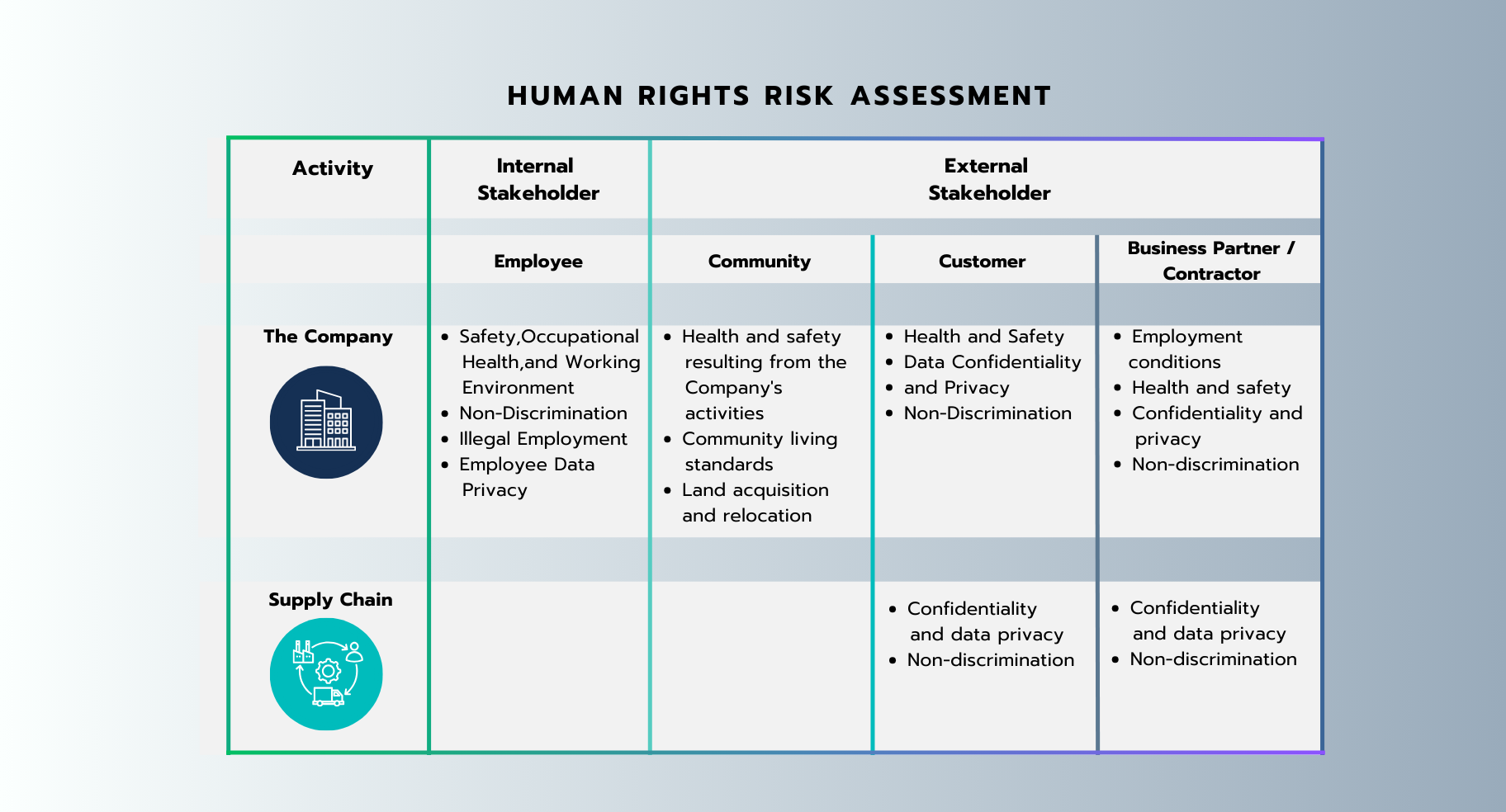
The scope of stakeholders includes vulnerable groups such as children, women, persons with disabilities, the elderly, migrant workers, and LGBTQIA+ individuals.
Risk Level Assessment - The Company has conducted a human rights risk assessment to determine the significance level of human rights issues, considering the severity of impact and likelihood of occurrence of 4 levels, which are Extreme, High, Moderate, Low.
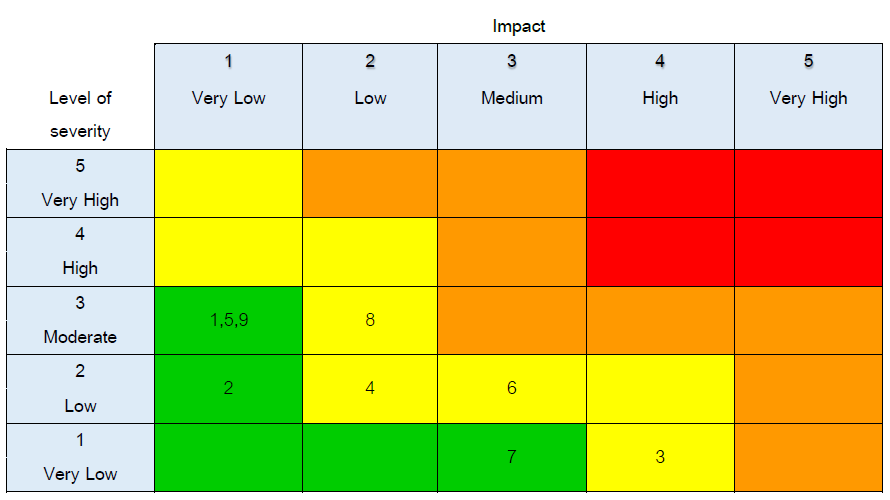
Human Rights Issues Assessed
Safety, occupational health, and working environment
Non-discrimination
Illegal employment
Employee data privacy
Health and safety resulting from the Company's operations
Community living standards
Land acquisition and displacement
Confidentiality and data privacy
Employment conditions
Risk Assessment Results - The results of the human rights risk assessment from business activities throughout the value chain indicate that no high-level human rights risks were identified. Risks were found to be at moderate and low levels. The Company continues to prioritize the establishment of preventive and mitigation measures for all human rights risk issues, aiming for effective management and prevention of human rights violations against all stakeholders.
3) Integration of Findings and Actions
For significant human rights risk issues, the Company has conducted an analysis to identify potential risks and established guidelines and measures to control these risks, including mitigating potential impacts. This is to ensure that the Company effectively manages human rights throughout its value chain, addressing such risks through its current operational guidelines.
4) Tracking and Communicating Performance
The Company mandates that all departments involved in the operations and activities of the Company and its subsidiaries that may affect stakeholders, including employees, communities, customers, partners/contractors, and vulnerable stakeholder groups, are responsible for overseeing and managing human rights risks. Human rights risk assessments will be reviewed annually, and compliance with guidelines, preventive measures, and human rights impact reduction measures will be monitored. Management plans will also be revised to ensure that established guidelines and measures effectively prevent or control human rights risk issues.
5) Remediation of Impacts (Remediate Adverse Impacts)
The Company has established channels for stakeholders to file complaints and a remediation process for those affected by human rights impacts from the Company's business activities. The channels for receiving complaints and whistleblowing are as follows:
The Company's email channel is: internalaudit@theplatinumgroup.co.th or
Complaint or whistleblowing box designated by the Company, or
Send a letter to the Chairman of the Audit Committee (who is an independent director) at the following address:
The Platinum Group Public Company Limited
111 Pier 111 (M2) Building, 21st Floor, Ratchadamri Road
Lumpini Subdistrict, Pathum Wan District,
Bangkok 10330
Upon receiving a complaint or whistleblowing report regarding a human rights violation, the recipient of the complaint must proceed with an initial assessment and summary, then present the complaint to a representative of the management for consideration of the damages incurred. Measures for managing the complaint will be established to provide appropriate relief and remediation to those affected. Furthermore, the process includes tracking and reporting the outcomes of corrective actions and remediation to the highest executive, as well as implementing measures to prevent recurrence in the future.
The Company will proceed with a fair investigation process and implement disciplinary measures, including remediation for those affected by human rights violations. Damages will be mitigated through appropriate and fair processes as stipulated in the Whistleblower Policy of the Company
In 2025, the Company had no reported cases of human rights violations.
Due Diligence Document Link
https://investor.theplatinumgroup.co.th/en/corporate-governance/human-rights-due-diligence
Employees — Plan & Guidelines
Has an Employee Management Plan
Yes
Plan Description
Treatment of Employees
Employees are a key stakeholder group that the Company aims to develop their potential and foster engagement, under fair and equitable treatment regarding employment, compensation, and promotion based on ability and performance. The Company also prioritizes safety, hygiene, and a good working environment. The Company supports continuous employee potential development to enhance professional work, build employee-organization engagement, and retain high-potential employees for the long term.
1. Human Rights Policy and Practices
The Company is committed to human rights management by adhering to human rights policy, which includes partners based on equitable and fair criteria, considering issues of employees, social aspects, and those within partner companies, as well as the environment. Human Rights are defined as the fundamental rights that all human beings are guaranteed or protected from discrimination solely based on physical or mental differences, race, nationality, religion, gender, language, age, skin color, education, social status, or any other matter. This is in accordance with the laws of each country or international treaties to which each country is obligated to comply, with the following principles:
Treat each other with respect, honor each other, and treat each other equally without discrimination based on physical or mental differences, race, nationality, religion, gender, language, age, skin color, education, social status, or any other matter.
Exercise due diligence in performing duties to prevent potential human rights violations in business operations, including from those who involved in business operations, monitor human rights respect, and report to supervisors to prevent actions that constitute human rights violations.
Treat equally in all employment processes, from recruitment, compensation, working hours and holidays, to assignment of job assignments, performance evaluations, training and development, career advancement planning, and other aspects, without discrimination.
No forced labor, human trafficking, or illegal child labor is used, nor any physical or psychological punishment of employees, whether through intimidation, detention, threats, abuse, or any form of violence.
The Company has implemented operational processes and human rights due diligence to identify potential human rights risks and ensure that the Company conducts business strictly in accordance with its Code of Ethics on Human Rights and its Human Rights Policy. Additionally, 100 percent of employees received human rights training. As a result, in 2025, there were no incidents where the Company was complained against or sued regarding human rights violations.
The Company provides channels for receiving complaints or reporting human rights-related issues, allowing employees or stakeholders to submit complaints via the Company's website: theplatinumgroup.co.th/. The Human Resources and Internal Audit departments will be responsible for receiving and investigating the reported issues.
2. Safety, Occupational Health, and Working Environment Policy and Practices
The Company prioritizes ensuring the safety and good health of its employees because employees are valuable resources and the foundation for sustainable growth. Therefore, the Company is committed to providing all employees with a good and safe working environment. The Company has established safety and occupational health policies in accordance with the Occupational Safety, Health, and Environment Act, as well as other relevant laws and regulations. This is achieved through the operations of the Occupational Safety, Health, and Environment Committee (OSHEC) in collaboration with the 5S Committee, which is responsible for providing training and knowledge to employees, as well as organizing campaigns and activities related to workplace safety, along with monitoring operational results.
Occupational Health Measures and Action Plans
1) Governance and Legal Compliance
Monitor and provide recommendations to ensure compliance with laws and regulations relating to occupational safety, health, and working environment.
Participate in and keep abreast of training programs concerning occupational safety, health, and working environment legislation.
Review, revise, and continuously improve policies and management approaches relating to occupational safety and health.
Recommend appropriate workplace safety management measures tailored to the organization’s operations and promote ongoing development and improvement.
2) Risk Assessment and Hazard Control
Conduct job hazard analysis to identify risks, establish preventive measures, and develop safe work procedures.
Assess risks related to occupational safety, health, and working environment.
Review operational plans or projects of various departments and provide recommendations on workplace safety measures.
Control, supervise, and maintain a safe working environment, including monitoring lighting levels, noise levels, and air quality.
Provide adequate and appropriate tools and install protective equipment to minimize operational risks.
3) Monitoring, Inspection, and Reporting
Conduct inspections and evaluations to ensure operations comply with established plans, projects, and safety measures.
Investigate and analyze the causes of work-related accidents, illnesses, or workplace disturbances, and report findings together with corrective and preventive recommendations.
Compile statistics, analyze data, and prepare reports on occupational accidents or work-related illnesses for submission to management.
4) Training and Safety Culture Development
Provide guidance and supervision to ensure compliance with the occupational safety, health, and working environment manual.
Organize occupational safety, health, and working environment training programs for employees, supervisors, and management.
Conduct basic and advanced fire safety training, fire evacuation drills, and emergency response exercises on a regular annual basis.
Provide first aid training.
Deliver knowledge and awareness programs on occupational and environmental diseases, with refresher training at least once annually.
Promote and cultivate a strong safety culture within the organization.
5) Employee Health Promotion
Monitor and assess workplace environmental conditions, or collaborate with legally authorized agencies or certified entities as required by applicable laws.
Arrange annual health check-ups and risk-based medical examinations for employees on a continuous basis.
In 2025, the Company had no accidents, work stoppages, work-related illnesses, or work-related fatalities, resulting in the Company receiving the ZERO Accident award for the 11th consecutive year.
3. Human Resource Management Policy and Practices
The Company establishes human resource management policies that align with the Company's strategies, the current global context, and relevant laws, regulations, and social management requirements. Employees are treated fairly and equally according to human rights principles, from recruitment, performance evaluation, potential development, career advancement opportunities, and fair compensation. This is to foster employee engagement, jointly create a positive culture, and grow sustainably with the organization, with the following guidelines:
1) Recruitment and Employment
The Company employs both proactive and reactive recruitment processes, offering opportunities to both external and internal candidates who possess suitable qualifications, knowledge, skills, and experience for open positions. This is done through both online and offline application channels, as well as through external agencies (Outsource) for certain roles, to recruit employees who are both "talented" and "virtuous." The Company selects personnel fairly, equally, and without discrimination, considering diversity and not limiting selection based on race, gender, religion, religious beliefs, or political opinions.
Additionally, the Company promotes the employment of persons with disabilities to improve their quality of life and enable them to showcase their abilities for societal acceptance and earn income to become self-reliant, aligning with the Sustainable Development Goals (SDGs) Goal 10: Reduced Inequalities within and among countries. In the year 2025, the Company implemented in accordance with Sections 33 and 35 of the Persons with Disabilities' Quality of Life Promotion and Development Act B.E. 2550 (2007), the Company employs 5 persons with disabilities, alongside contributing to the Persons with Disabilities' Quality of Life Promotion and Development Fund as required by employment law.
2) Performance Management
The Company systematically, clearly, transparently, and fairly evaluates employee performance by setting goals and Key Performance Indicators (KPIs) that align with the organization's strategies and objectives, from the organizational level to departmental and individual levels. The Company assesses performance by considering success indicators (KPIs) alongside competency evaluations. Employee performance results will be used as criteria for adjustment positions, annual salary increases, and bonuses. In 2025, 100 percent of employees received performance evaluations.
3) Career Advancement Management
The Company provides opportunities for employees' career advancement to retain talented employees and motivate them to perform and develop themselves further. Therefore, the Company has established a Career Path development plan, succession planning, and employee potential development plans to enhance skills and experience, preparing them for consideration for higher positions in the future. The Company will treat employees equally, without discrimination, and fairly. The Company will consider knowledge, abilities, and various factors such as performance, competencies, experience, length of service, and other clear criteria to ensure fairness and transparency.
4) Compensation and Welfare Management
The Company establishes compensation and welfare management policies based on fairness, non-discrimination, and equal opportunities, covering women, persons with disabilities, and other disadvantaged groups. The Company has guidelines for determining employee compensation, which involve surveying and studying data related to cost of living, economic conditions, labor laws, and other relevant issues. This information is analyzed to create a suitable and fair salary and welfare structure that is competitive within the same business sector, helping employees and their families achieve a better quality of life and meet their basic needs. Additionally, annual salary adjustments are considered based on employee performance evaluations, the Company's operating results, and the overall economic conditions. Furthermore, the Company provides additional benefits beyond those required by law, such as uniforms, diligence allowances, group health insurance, and financial assistance for various occasions.
5) Employee Potential Development
To enhance the capabilities of the organization and its employees, preparing them to grow with future business expansion, the Company has improved its personnel development systems and processes. This involves surveying the needs of each department and implementing a Competency-Based Training and Development approach to enhance personnel efficiency, such as digital skills, management skills, and leadership development, to align with the Company's strategies while maintaining a foundational understanding of good corporate governance in employee training for sustainable growth. The Company conducts training through various formats, including internal and external seminars, E-Learning, and practical learning. In 2025, the Company organized diverse training courses covering all job functions and continuously developed employees through various activities, such as:
Seminar about Challenges and Obstacles in Reducing Greenhouse Gas Emissions from Cooling Systems
Unlocking ESG
Seek TALKS Unlocking Potential: Developing Employee Potential with a Growth Mindset
WAGES, WALLETS & WELL-BEING: The Future of Employee Benefits in a Branchless Banking World
Update on new occupational safety, health, and working environment laws
Organizational Data Management and Analysis for Accounting
Employee Work Funds
6) Building Employee Engagement and Participation within the Organization
The Company promotes the development of employee engagement through effective activities and human resource management to meet employees' needs and expectations, ensuring they receive good care, happiness, and life stability. Therefore, the Company conducts an annual employee satisfaction survey, covering basic needs, career advancement, occupational health and safety, as well as compensation and benefits. The survey results are analyzed and reported to the Executive Board to develop and build employee-organization engagement and reduce turnover rates. The opinions or data obtained from employee feedback are kept confidential, allowing employees to express their views honestly, which benefits the Company in implementing further corrections and improvements.
In 2025, the Company conducted an employee satisfaction survey, the results of which indicated that the employee engagement level stood at 84 percent.
7) Labor Relations Management
Labor relations management remains a key priority, as the Company recognizes employees as essential to achieving its goals. The Company ensures equal treatment, respects human rights, complies with labor laws, and prohibits discrimination based on origin, race, religion, gender, or any status unrelated to job performance. To promote fairness and reduce disparities and turnover, a welfare committee with representatives from all levels has been established to gather employee feedback for improvement and development. All complaints are investigated fairly, transparently, and verifiably, with appropriate remedies provided to affected employees.
Plan Areas
| Plan Area | Other — Please Specify |
|---|---|
| Fair employee compensation | |
| Employee training and development | |
| Promoting employee relations and participation | |
| Child labor | |
| Occupational health and safety in workplace | |
| Others | Employment/Termination with equality and fairness, provision of appropriate employee welfare. |
Employees — Workforce
Workforce Data
| Metric | Current Year | Previous Year | Two Years Ago |
|---|---|---|---|
| Total number of employees (Persons) | 789 | 748 | 670 |
| Number of male employees (Persons) | 412 | 394 | 349 |
| Number of female employees (Persons) | 377 | 354 | 321 |
| Total employment of disabled persons (people) | 5 | 4 | 3 |
| Total disabled employees (people) | 5 | 4 | 3 |
| Total male disabled employees (people) | 3 | 2 | 1 |
| Total female disabled employees (people) | 2 | 2 | 2 |
| Total disabled workers who are non-employee (people) | 0 | 0 | 0 |
| Contributions to the fund for promoting and improving the quality of life for disabled persons | 1 | 1 | 1 |
| Total number of male employees in operational level (Persons) | 334 | 312 | 267 |
| Total number of male employees in management level (Persons) | 76 | 80 | 78 |
| Total number of male employees in executive level (Persons) | 2 | 2 | 4 |
| Total number of female employees in operational level (Persons) | 286 | 270 | 243 |
| Total number of female employees in management level (Persons) | 89 | 81 | 77 |
| Total number of female employees in executive level (Persons) | 2 | 3 | 1 |
Employees — Remuneration & Provident Fund
Remuneration & Provident Fund
| Metric | Current Year | Previous Year | Two Years Ago |
|---|---|---|---|
| Total disabled employees (people) | 400,916,736 | 323,417,794 | 221,739,523 |
| Total male employee remuneration (Baht) | 209,785,835 | 164,006,679 | 121,750,814 |
| Total female employee remuneration (Baht) | 191,130,901 | 159,411,115 | 99,988,709 |
| Number of employees eligible to participate in PVD (persons) | 773 | 748 | 670 |
| Total number of employees joining employee provident fund (Persons) | 549 | 392 | 294 |
| Percentage of total number of employees joining employee provident fund to total number of employees (%) | 69.58 | 52.41 | 43.88 |
| Number of PVD members / Total eligible employees (%) | 71.02 | 52.41 | 43.88 |
| Total amount of provident fund contributed by the Company (Baht) | 8,857,617 | 6,231,896 | 5,383,748 |
| Total amount of provident fund contributed by employee (baht) |
Employees — Training & Development
Training Data
| Metric | Current Year | Previous Year | Two Years Ago |
|---|---|---|---|
| Average employee training hours (Hours / Person / Year) | 22.39 | 35 | 18.14 |
| Employee development and training expenses (baht) | 1,081,852 | 1,439,266 | 672,301 |
Employees — Occupational Health & Safety
Occupational Health & Safety Data
| Metric | Current Year | Previous Year | Two Years Ago |
|---|---|---|---|
| Total number of lost time injury incidents by employees (Cases) | 0 | 0 | 0 |
Employees — Labour Relations
Labour Relations Data
| Metric | Current Year | Previous Year | Two Years Ago |
|---|---|---|---|
| Total voluntary resignations (Persons) | 132 | 188 | 144 |
| Male employees who voluntary resigned (Persons) | 71 | 96 | 90 |
| Female employees who voluntary resigned (Persons) | 61 | 92 | 54 |
| Percentage of employee turnover leaving the Company voluntarily (%) | 16.73 | 25.13 | 21.49 |
| Evaluation result of employee engagement | 1 | 1 | 1 |
Employees — Employee Representation
Employees Are Represented Collectively
Yes
Forms of Representation
| Form |
|---|
| Welfare committee |
| Labor relations committee |
Employees — Targets
Has Set Employee Targets
Yes
Targets
| Indicator | Target Areas | Base Year | Base Year — Description | Target Year | Target Year — Description |
|---|---|---|---|---|---|
| Assessment Scores for the Employee Satisfaction and Engagement Survey within the Organization | 2985 · Description: Promoting employee relations and participation | 2,023 | 82 percent | 2,027 | Promote employee engagement rate to exceed 85 percent. |
| Number of employees injured and fatalities from work | 2988 · Description: Safety and occupational health at work | 2,023 | 0 people | 2,027 | • Maintain a zero percent lost-time injury rate and fatality rate. • Receive ZERO Accident awards annually. |
| Average employee turnover rate | 2990 · Other name: Reduce employee turnover rate · Description: Others | 2,023 | 21.49 percent | 2,027 | Reduce employee turnover rate to less than 20%. |
Employees — Performance & Outcomes
Has Performance Results
Yes
Performance Description
Due to the company's continuous commitment to promoting a good quality of life and creating a supportive working environment for employees, the company has gained trust from government agencies and received significant awards in human resource management in the year 2025, reflecting continuous management efficiency and the elevation of organizational standards towards sustainability. The Company received awards from the Ministry of Labour for the year 2025 as follows:
National Award of Honor for Outstanding Establishment in Labor Relations and Welfare, for the 13 consecutive year
National Award of Honor for Outstanding Model Establishment in Safety, Occupational Health, and Working Environment, for the 9 consecutive year (Diamond Level)
Award for the Campaign to Reduce Work Accident Statistics to Zero, for the 11 consecutive year (Gold Level)
Customers — Plan & Guidelines
Has a Customer Management Plan
Yes
Plan Description
Customer Treatment
The Company recognizes the importance of building customer satisfaction and trust, as customers are key stakeholders who support the Company's business, which is a factor leading to long-term business competitiveness, as well as adapting to meet changing customer needs or expectations. The Company manages to maintain good relationships with customers, provides services that are safe for customer health and hygiene, respects personal rights, and establishes systems for protecting customer data in full compliance with legal requirements. In 2025, the Company operates according to the customer satisfaction development plan as follows:
1) Management Guidelines, Service Safety Development, and Operations in Various Projects
In conducting business and providing services to customers, the Company considers the life and safety of customers as a critical issue for organizational sustainability. Therefore, the Company focuses on safety and the prevention of accidents that may occur during business operations due to unexpected emergencies or crises, such as natural disasters, civil unrest, epidemics, protests, and other serious incidents. The Company has thus established advance emergency and crisis management plans to reduce the severity and damage of incidents, with the following guidelines:
1) Prevention and Mitigation of Emergency or Crisis Impacts
2) Preparedness for Emergency or Crisis Response
3) Management During an Emergency or Crisis
4) Post-Emergency or Crisis Management
Standardized security systems (CCTV) are in place, and hazard warning signals are installed in accordance with laws and area suitability, including emergency announcement systems. Dedicated personnel are assigned to monitor these systems at all times.
The Company has established a department responsible for maintenance and inspection to ensure equipment is consistently up to standard, safe, and ready for use. For example, elevators and escalators are regularly inspected, and warning signs are posted during operation to raise awareness among users and reduce the rate of potential accidents.
Preparation for responding to emergencies and crises is mandated, both before and after incidents, to prevent and reduce recurrence, or to manage incidents more efficiently.
Regular training and drills are conducted according to emergency and crisis management plans to ensure personnel involved with building structures and various internal areas understand their roles and responsibilities, and to assess personnel capabilities and the effectiveness of the management plan in responding to incidents.
The Company regularly tests, improves, and reviews its emergency and crisis management plans annually to identify deficiencies and ensure they align with current potential situations.
2) Relationship Management to Enhance Customer and Guest Satisfaction
The Company aims to build strong customer relationships and manage customer relations efficiently to meet customer needs and create satisfaction for both B2B and B2C customers. This is a crucial part of achieving the Company's business goals through quality and equitable service based on good business practices, including facilitating various aspects of safety and hygiene. Customer relationship management must adhere to guidelines for accurate and complete information communication. The Company conducts customer satisfaction and opinion surveys to analyze the results, enhance satisfaction, create positive customer experiences, and develop and improve the Company's business processes to compete with other operators.
In the hotel business, the Company prioritizes managing relationships with guests at every stage to create positive experiences and satisfaction. This involves comprehensively understanding guests' needs, expectations, and feedback through efficient communication processes and friendly, attentive, and standardized services. All three of the Company's hotels continuously develop service quality, particularly through staff training in service provision and channels for feedback, such as satisfaction surveys, handling complaints and suggestions, and responding to comments promptly and appropriately. This data is then analyzed to improve operations in line with guest requirements. Furthermore, the Company promotes building long-term relationships with guests by aiming to create a lasting impression of service quality, thereby enhancing the stay experience and encouraging repeat visits to the hotels.
In the shopping center business, the Company undertakes activities to develop products and services to enhance customer satisfaction, including safety and hygiene, under the concept of "Customer Care, Service Development, Happy Team" through the following activities:
Provide training in good service, including essential soft and hard skills, for customer relations staff and building operations staff.
Continuously develop the potential of partners or shop operators through the Platinum Empowering SMEs project for sustainable growth together.
Build good relationships and communicate quickly and efficiently with shop operators by informing them of various activities via Line Official Account.
Organize Focus Groups by inviting relevant stakeholders to exchange opinions to find effective joint solutions.
In the hotel business, leading global hotel chains such as Marriott International, Accor, and InterContinental Hotels Group prioritize building long-term customer relationships through Loyalty Programs and continuously enhancing the guest experience. All chains offer membership programs designed for guests to accumulate points from stays and various services, providing differentiated experiences (Experiential Engagement) beyond accommodation benefits, and utilizing data and technology to analyze customer data for services tailored to each customer's behavior and needs.
Satisfaction Survey
Customer and hotel guests Satisfaction Survey | Goals Percentage | Results Percentage |
1) Rental and Service Business (Shopping Mall) | 92 | 92 |
2) Hotel Business (Average) | 93 | 95 |
3) Personal Data Protection
The preservation, protection, and safeguarding of personal data of all stakeholders in accordance with the Personal Data Protection Act B.E. 2562 (2019) (PDPA).
Recognizing the importance of processing personal data appropriately and lawfully, the Board of Directors approved and issued the Company's Personal Data Protection Policy, with the objective of establishing a framework for personal data processing in various business processes of the Company, without unduly affecting the rights of data subjects, in accordance with the Personal Data Protection Act B.E. 2562 (2019). The Company has also appointed a Data Protection Officer (DPO) who is responsible for managing and overseeing operations related to personal data. The full policy, guidelines, and management processes regarding the protection of personal data processing have been published on the Company's website: www.theplatinumgroup.co.th under Privacy Policy.
The Company has appointed a Data Protection Officer, who serves as the coordinator for the Company's personal data protection, and can be contacted via channels as follows:
Personal Data Protection Department
The Platinum Group Public Company Limited
111 Pier 111 M2 Building, 21st Floor,
Ratchadamri Road Lumpini Sub-district
Pathum Wan District, Bangkok 10330
Telephone: 02-121-9999
Email: dpo@theplatinumgroup.co.th
In 2025, the Company had no incidents or complaints related to personal data breaches.
4) Advertising and Public Relations
The Company has established guidelines for communicating various information in its Good Corporate Governance Policy. Recognizing its responsibility to service users, the Company conducts public relations and marketing activities clearly, fairly, promptly, and accessibly to all sectors equally. This includes advertising or public relations based on accuracy, without distorting facts or undertaking any actions that violate relevant laws or mislead stakeholders, through appropriate communication channels.
Plan Areas
| Plan Area |
|---|
| Responsible production and services for customers |
| Communication of product and service impacts to customers/consumers |
| Development of customer satisfaction and customer relationship |
| Protection of customer personal information |
Customers — Satisfaction Results
Customer Satisfaction Results
| Metric | Current Year | Previous Year | Two Years Ago |
|---|---|---|---|
| Evaluation results of customer satisfaction | 1 | 1 | 1 |
Customers — Targets
Has Set Customer Targets
Yes
Targets
| Indicator | Target Areas | Base Year | Base Year — Description | Target Year | Target Year — Description |
|---|---|---|---|---|---|
| Service Satisfaction Survey Assessment Scores | 3009 · Description: Development of customer satisfaction and customer relationship | 2,023 | 90 percent | 2,027 | 95 percent |
| Complaint | 3010 · Description: Consumer data privacy and protection | 2,023 | No complaints | 2,027 | No complaints annually. |
Customers — Performance & Outcomes
Has Performance Results
Yes
Performance Description
Over the past year, The Platinum Fashion Mall continued the Platinum Empowering SMEs 2025: Rack to Rise project under the concept of "Social Content to Social Commerce". This initiative aims to enhance the potential and increase business opportunities for shop operators within the shopping center by elevating digital marketing skills and online product sales alongside in-store sales. For the first time, the program "The Next Seller", a reality game show activity, was launched to allow shops to compete and develop their sales potential in the digital era through missions designed to discover truly potential sellers. The project received approximately 1.2 million likes and generated sales of more than 100,000 baht.
The project received cooperation from TikTok Shop, a leading e-commerce platform, and online marketing and sales influencers, who shared knowledge, experience, and effective techniques for content creation and live product sales. The project focuses on connecting in-store sales, which are the primary business foundation (On Ground), with online channels (Online), particularly Live Commerce. This aims to increase access to new customer segments, especially the younger generation, and enhance the sustainable competitiveness of the shops. This reflects The Platinum Fashion Mall's commitment to nurturing and supporting its customers as business partners for long-term mutual growth. The Platinum Fashion Mall's marketing team provided close support throughout every work process with the shops to foster participation and encourage practical, continuous implementation, which was very well received.

Community & Social — Plan & Guidelines
Has a Community & Social Plan
Yes
Plan Description
The Company believes that a strong society and community are fundamental to the nation's progress and ability to adapt to change. The Company therefore focuses on sustainable development of quality of life and society. "Social Responsibility" is an ideology that the Company has long adhered to as a business guideline, by fostering business growth alongside social development and improving the quality of life. It prioritizes addressing issues that impact people's livelihoods and quality of life, in order to strengthen the economy and reduce social inequality, in line with the Sustainable Development Goals (SDGs): Goal 3, which promotes good health and well-being for all at all ages, serving as a crucial foundation for the nation; and Goal 4, which ensures inclusive and equitable quality education and promotes lifelong learning opportunities for all.
Plan Areas
| Plan Area |
|---|
| Employment and professional skill development |
| Education |
| Religion and culture |
| Forests and natural resources |
| Sports and recreation |
| Occupational health, safety, health, and quality of life |
| Disadvantaged and vulnerable groups |
| Water and sanitation management |
| Reducing inequality and promoting social equality |
Community & Social — Targets
Has Set Community & Social Targets
Yes
Targets
| Indicator | Target Areas | Base Year | Base Year — Description | Target Year | Target Year — Description |
|---|---|---|---|---|---|
| Provision of scholarships to improve quality of life and reduce social inequality. | 3037 · Description: Education · 3044 · Description: Reducing inequality | 2,023 | Scholarships are awarded annually. | 2,027 | Scholarships are awarded annually. |
Community & Social — Performance & Outcomes
Has Performance Results
Yes
Performance Description
The Company prioritizes creating benefits for communities and society. Therefore, it has established plans to mitigate negative impacts and generate positive benefits to address societal problems, both in the short and long term, through its business operations. It also supports activities that contribute to improving the quality of life, utilizing the Company's existing resources and business networks, both directly and indirectly, through various forms of activities, including surveying the needs of surrounding communities to foster good relationships. In 2025, the Company participated in various activities to align with the needs of surrounding communities, including joining activities with business partners to achieve objectives. Examples include the distribution of souvenir dolls to guests staying at Novotel Hotel, which are high-quality handicrafts made from leftover fabric and hand-sewn by girls and women residing in the Din Daeng community, with all proceeds donated to Good Shepherd Sisters Bangkok. Additionally, Moxy Hotel, in collaboration with Marriott hotels in Bangkok, organized the "Road to Give 2025" event, creating items from plastic bottle caps for sustainability and donating over 48,000 Baht to support Operation Smile Thailand and Mercy Centre. The Company also provided food for all runners participating in this event, which helped promote good health among the participants.
Additionally, the Company has continuously implemented its scholarship program for the 9th consecutive year, providing a total of 188 scholarships valued at 1,000,000 Baht. These scholarships support the children of government officials, employees, and students within the Ratchathewi District, Pathum Wan District, Phaya Thai Metropolitan Police Station, Lumpini Metropolitan Police Station, and The Platinum Group Public Company Limited. This project significantly contributes to opening educational opportunities, concretely enhancing the knowledge and capabilities of children and youth, which leads to the development of quality human resources and serves as a crucial force in driving society and the nation in the long term. The Company firmly believes that continuous promotion and support for youth will yield sustainable positive outcomes for society.
Other Social Management
Plan & Outcomes — Description
Treatment of Business Partners
The Company places importance on supply chain management to support sustainable business development. Therefore, it emphasizes treating partners equally, based on the principle of fair competition in all businesses, primarily focusing on the Company's best interests, alongside developing and maintaining good, sustainable relationships with partners and business allies. The Company has thus established a procurement policy and code of conduct which specifies criteria and processes for procurement, considering environmental, social, and governance impacts, including labor and human rights issues, to ensure partners conduct business in accordance with the procurement code of conduct, and for the Company's procurement staff to adhere to the ethical framework, treating all partners transparently, honestly, with integrity, and fairly, through various operational processes as follows:
1) Partner Sourcing and Selection
The Company has established policies and procurement processes for both goods and services, and has communicated these principles to partners for mutual adherence, to ensure transparency, accountability, and maximum benefit for the Company. The Company will strictly select partners who operate legally, in accordance with regulations and various criteria related to trade competition as stipulated in the "Procurement Code of Conduct". In addition to economic factors such as price, product quality, and delivery time, the Company also considers issues of environmental, social, and community responsibility, respect for human and labor rights, occupational health, safety, and working environment. Furthermore, by 2025, all partners will have acknowledged the Company's Procurement Code of Conduct (with a target of 100 percent).
2) Partner Potential Assessment
To maintain efficiency and reduce operational risks throughout the supply chain, the Company has established criteria for annually auditing and monitoring partner performance. The collected data is used to analyze partner work processes, such as management capability, product quality, ability to deliver work on schedule, and compliance with contract terms, among others. The Company will use the assessment results to rank and select partner groups for future business collaboration. This applies if partners do not meet the assessment criteria set by the Company. The Company provides opportunities for partners to develop and improve their work processes to meet the Company's standards efficiently within the specified timeframe, to be considered for re-selection. Furthermore, in 2025, The Company was able to assess the performance of 92 percent (target was 90 percent) of all partners with whom it conducts business.
3) Partner Potential Development
The Company has a policy to enhance partner capabilities through sustainability assessments covering activities in three dimensions: environmental, social, and governance. This is to support partners in operating ethically and responsibly towards society, with a target of achieving a 90 percent pass rate. The Company will gradually increase the number of partners selected based on sustainability assessment criteria across all business supply chain processes each year, to promote environmentally friendly procurement (Green Procurement) in line with subsequent government policies. The assessment results will be used as data for developing joint business operations. Furthermore, the Company has issued a letter requesting cooperation from partners regarding anti-corruption and gift acceptance, sent to its partners to demonstrate its commitment to combating all forms of corruption and building confidence among all stakeholders, as well as to contribute to the social and economic development of the country. The Company has also invited its partners to join the Collective Action Against Corruption (CAC) of the Thai private sector.
4) Building Good Relationships with Partners
The Company places importance on maintaining relationships with partners for long-term joint business operations, fostering good relationships and mutual understanding, and avoiding situations that may lead to conflicts of interest, through operations under the following principles:
Treat all partners equally, transparently, honestly, with integrity, and fairly, based on the principle of fair returns for both parties.
Strictly adhere to agreements, contract terms, and commitments made to partners. If conditions cannot be met, the Company will promptly inform partners to negotiate fair and swift solutions.
Has a policy to maintain the confidentiality of partners and business allies throughout the period of joint business operations. The Company will strictly keep all partner information confidential and will not disclose it to others.
The Company provides channels for partners who interact with internal procurement to submit various complaints, including issues regarding violations of partner guidelines and the procurement code of conduct, to uphold the organization's good governance principles.
To foster understanding of how to correctly adhere to the established criteria, the Company has organized training sessions for executives and employees continuously.
Treatment of Creditors
The Company prioritizes fair and responsible treatment of creditors. A written policy for creditor treatment has been established, as outlined in the Good Corporate Governance Policy, and is divided into two types:
1) Trade Creditors
The Company adheres to its obligations to trade creditors by paying them on time according to commercial agreements and contracts established upon service acceptance. The Company has clearly defined payment dates and methods. Creditors can submit invoices on any business day, with payment scheduled by bank transfer or check on the 25th of each month.
2) Loan Creditors
The Company prudently manages its loans by securing appropriate funding sources for its objectives and as needed. The Company strictly adheres to all terms and conditions of loan agreements, including managing operations to assure creditors of its financial standing and repayment capability. The Company's policy is to continuously report compliance with conditions to creditors. In cases where any condition cannot be met, the Company will promptly notify creditors in advance to jointly consider solutions and prevent damages. The Company has never defaulted on debt and interest payments to creditors according to contracts and conditions.
Law Violation Incidents
Law Violation Incidents
| Metric | Current Year | Previous Year | Two Years Ago |
|---|---|---|---|
| The total number of cases or incidents of significant violations of laws or regulations regarding social and human rights (Cases) | 0 | 0 | 0 |
| The total number of cases or incidents that cause significant labor disputes (Cases) | 0 | 0 | 0 |
| The total number of cases or complaints related to consumer rights violations (Cases) | 0 | 0 | 0 |
| The total number of cases or complaints related to partner rights violations (Cases) | 0 | 0 | 0 |
| The total number of cases or incidents that cause disputes with the community/society (Cases) | 0 | 0 | 0 |
| The total number of cases or incidents related to cyber security or customer data breaches (Cases) | 0 | 0 | 0 |
| The total number of cases or incidents related to safety and occupational health at work (Cases) | 0 | 0 | 0 |